This article contains affiliate links. If you book through them we may earn a small commission at no extra cost to you — it helps keep Authentic Japan free.
This guide is for anyone who already knows their travel dates and wants to know *where in Japan the autumn leaves (紅葉, koyo) will actually be good when they arrive*. Most "best spots" lists show you twelve beautiful photos taken on twelve different weeks. That is the problem: Japan's autumn color moves from the high north in September to the warm south-west in December, so the best place for you depends far more on your dates than on any ranking.
The short answer for 2026: if you travel in October, go north or up into the mountains (Nikko, Oirase, the high Alps). If you travel in mid to late November, Tokyo's Mt Takao, Miyajima and Kyoto are the main event — both major private forecasters expect a later-than-usual season this year after a hot summer. If you travel in early December, stay in the cities: central Kyoto, Osaka and Tokyo's gardens. Forecast dates below come from Weathernews and Japan Meteorological Corporation's 2026 forecasts, and event details were checked on official tourism sites on 14 October 2026. Forecasts move as the season develops, so treat every date as a guide, not a promise.
At a glance: where to go for your dates and travel style
Find your travel window in the left column, then read across to the style that fits you. Each spot is explained in more detail further down.
| Your dates | First-time visitor | Based in Tokyo | Based in Kansai (Kyoto/Osaka) | Hate crowds | Want evening light-ups |
|---|---|---|---|---|---|
| Early October | Hokkaido (Daisetsuzan foothills, lakes) | Too early near Tokyo — go to the high mountains instead | Too early — Kansai is still green | Daisetsuzan, Tohoku mountains | Few light-ups yet |
| Late October | Nikko (Irohazaka ~Oct 31) | Nikko day trip | Still early — the Japanese Alps are the nearest strong color | Oirase Gorge on a weekday | Few; most start in November |
| Mid November | Lake Kawaguchiko with Mt Fuji | Kawaguchiko or Nikko's lower town | Miyajima (~Nov 19), Minoo | Korankei on a weekday morning | Kawaguchiko maple corridor, Korankei |
| Late November – early December | Kyoto: Arashiyama (~Nov 24), Tofuku-ji, Eikando | Mt Takao (~Nov 22), city ginkgo | Kyoto temples, then central Kyoto into December | Kyoto at 7–8 a.m., or smaller temples | Kyoto temple night viewings (Eikando, Kiyomizu-dera) |
Two dates worth circling in 2026: Culture Day (Tuesday, 3 November) brings domestic crowds to Nikko and the mountains, and Saturday 21 to Monday 23 November (Labor Thanksgiving Day) is a three-day weekend that lands right on Kyoto's and Tokyo's forecast peak. If you can move a famous spot to the weekdays either side, do it.
The 12 spots, from earliest to latest
The spots are ordered by when they usually peak. Where a 2026 forecast exists from Weathernews, it is given; otherwise the window shown is the spot's usual past tendency according to local tourism bodies. For a region-by-region view of the whole country, see our Japan autumn leaves 2026 regional map.
1. Daisetsuzan (大雪山), Hokkaido — the first color in Japan
Daisetsuzan is a high volcanic range in central Hokkaido and usually Japan's first autumn color, typically from mid-September. In 2026 its upper slopes have already peaked. That does not make it irrelevant for an early-October trip: lower areas such as the onsen villages at the foot of the mountains and Hokkaido's lakes carry color through October. Access: fly to Asahikawa or Sapporo, then rail, bus or a rental car — it is a destination, not a day trip from Tokyo or Osaka. Suits: hikers, nature lovers and anyone visiting in early October. Crowds: low to moderate; ropeway stations get busy on weekends. Mountain weather can turn wintry quickly in October, so check trail and ropeway status before you go.
2. Oirase Gorge (奥入瀬渓流), Aomori — the best walk in Tohoku
Oirase is a mountain stream in Aomori Prefecture with a riverside walking path of about 14 km, lined with waterfalls and beech and maple forest, ending at Lake Towada. Its color usually peaks around late October. Access: Shinkansen from Tokyo to Hachinohe or Shin-Aomori, then a seasonal bus — allow most of a day each way from Tokyo, so plan at least one night. Suits: people who hate crowds and like walking; repeat visitors who have already done Kyoto. Crowds: moderate; the road along the gorge gets congested on autumn weekends, so a weekday is much calmer. You can walk just a section rather than the whole path.
3. Nikko (日光), Tochigi — the big October color near Tokyo
Nikko combines the ornate Toshogu Shrine with mountain forest, Lake Chuzenji and Kegon Falls. Color starts high up and moves down: Weathernews forecasts the Irohazaka switchback road around 31 October 2026, with the shrine area in town turning later, into November. Access from Tokyo: about 1.5–2 hours by train, then buses up to Lake Chuzenji. Suits: first-timers based in Tokyo, late-October and early-November travelers. Crowds: high on weekends and on Culture Day (3 November), when the Irohazaka road can back up badly — on those days, go very early or swap the mountain section for the shrines in town. Our Nikko one-day guide from Tokyo has a full timed route.
4. Lake Kawaguchiko (河口湖), Yamanashi — maples with Mt Fuji
Lake Kawaguchiko is the one place on this list where you can put red maples and Mt Fuji in the same photo. The town holds the Fuji Kawaguchiko Autumn Leaves Festival (富士河口湖紅葉まつり) along the "Maple Corridor" (もみじ回廊), a riverside path of old maple trees on the lake's north shore, with evening illumination. The color here usually peaks from late October to mid-November according to local tourism information. Access from Tokyo: highway buses from Shinjuku take roughly two hours depending on traffic, or the train via Otsuki. Suits: first-timers, Tokyo-based travelers, light-up fans. Crowds: high on festival weekends; Mt Fuji views are best early in the morning before clouds build. Exact 2026 festival dates and light-up hours were not confirmed on the organiser's official site at the time of writing — check the Fujikawaguchiko town tourism site before you go.
If you would rather not juggle bus timetables, a day tour that includes Kawaguchiko is the simplest option. Our guide to Mt Fuji day tours from Tokyo compares the main types.
5. Korankei (香嵐渓), Aichi — 4,000 maples near Nagoya
Korankei is a river valley in the old town of Asuke in Toyota City, famous for around 4,000 maple trees and one of the best-known autumn spots in central Japan. It usually peaks in mid to late November. Aichi Prefecture's official tourism site lists the 71st Korankei Momiji Festival from 7 to 23 November 2026, with evening light-ups. Access: from Nagoya, train and bus take about 1.5 hours; in the season there is also a direct bus from Yakusa Station on the Aichi Loop Line. It is easy to slot in between Tokyo and Kyoto with a stop in Nagoya. Suits: light-up fans, travelers who want a big maple valley without Kyoto's crowds. Crowds: very high on weekends, when traffic into Asuke is notoriously slow — go on a weekday and by public transport.
6. Miyajima (宮島), Hiroshima — maples behind the floating torii
Behind Itsukushima Shrine on Miyajima lies Momijidani Park, "maple valley", where small bridges cross a stream under red leaves. Weathernews forecasts Miyajima's peak around 19 November 2026, a few days before Kyoto — which makes it a natural first stop on a western Japan trip. Access: from Osaka, Shinkansen to Hiroshima (about 1.5 hours), then the train and ferry to the island. Suits: first-timers, Kansai-based travelers, people combining autumn with Hiroshima. Crowds: high in the middle of the day around the shrine, much quieter in the park early in the morning. See Hiroshima and Miyajima in one day from Osaka for timings.
7. Minoo Park (箕面公園), Osaka — the easy escape from Osaka
Minoo is a wooded valley on the northern edge of Osaka with a riverside path of about 3 km leading up to Minoo Falls. Color usually peaks from mid to late November. Locals know it for momiji tempura — maple leaves fried in sweet batter, sold along the path. Access: Hankyu Railway from Osaka-Umeda to Minoo Station (change at Ishibashi Handai-mae), about 30 minutes. Suits: Osaka-based travelers with half a day, families. Crowds: busy on weekends, but nothing like Kyoto; weekday mornings are pleasant.
8. Mt Takao (高尾山), Tokyo — hillside color without leaving Tokyo
Mt Takao is a 599-metre mountain on Tokyo's western edge with a temple near the top, a cable car and several hiking trails. Weathernews forecasts its peak around 22 November 2026. Access: about 50 minutes from Shinjuku on the Keio Line to Takaosanguchi. Suits: Tokyo-based travelers with half a day, families, light hikers. Crowds: very high on weekends and holidays — the cable car queue can be long, and 21–23 November is a three-day weekend. On a weekday, or by walking up Trail 1 instead of queuing, it is a lovely morning.
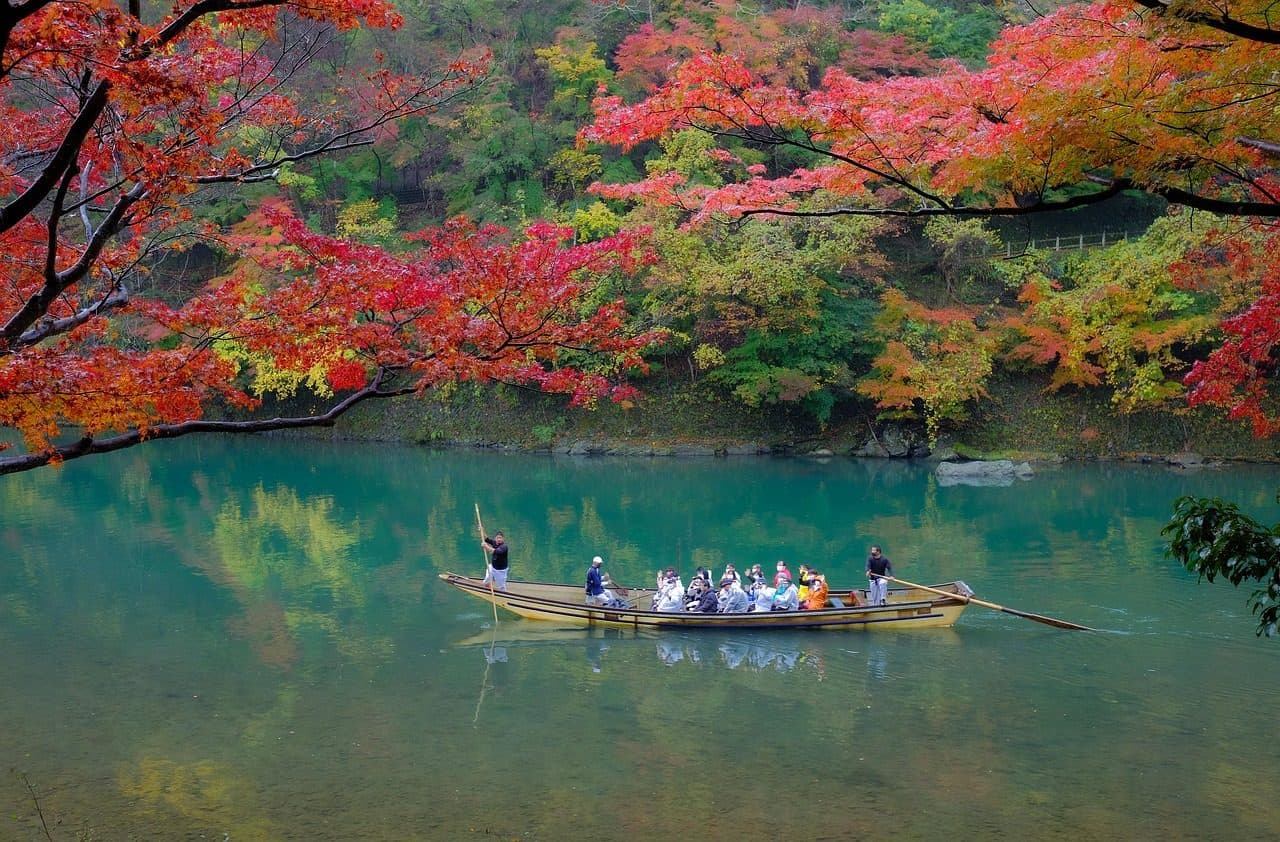
9. Arashiyama (嵐山), Kyoto — river, mountain and maples
Arashiyama on Kyoto's western edge has the classic view: the Togetsukyo Bridge, the Katsura River and hillsides of red and orange. Weathernews forecasts the peak around 24 November 2026. It is also where you can see the gorge from the Sagano Romantic Train or the Hozugawa river boat. Access: about 15 minutes from Kyoto Station on the JR Sagano Line; from Tokyo, the Shinkansen to Kyoto takes about 2 hours 15 minutes. Suits: first-timers, anyone in Kyoto in late November. Crowds: extreme on peak weekends. Arrive before 8:30 a.m. Our Arashiyama one-day route gives a timed plan.
10. Tofuku-ji (東福寺), Kyoto — the famous bridge over a sea of maples
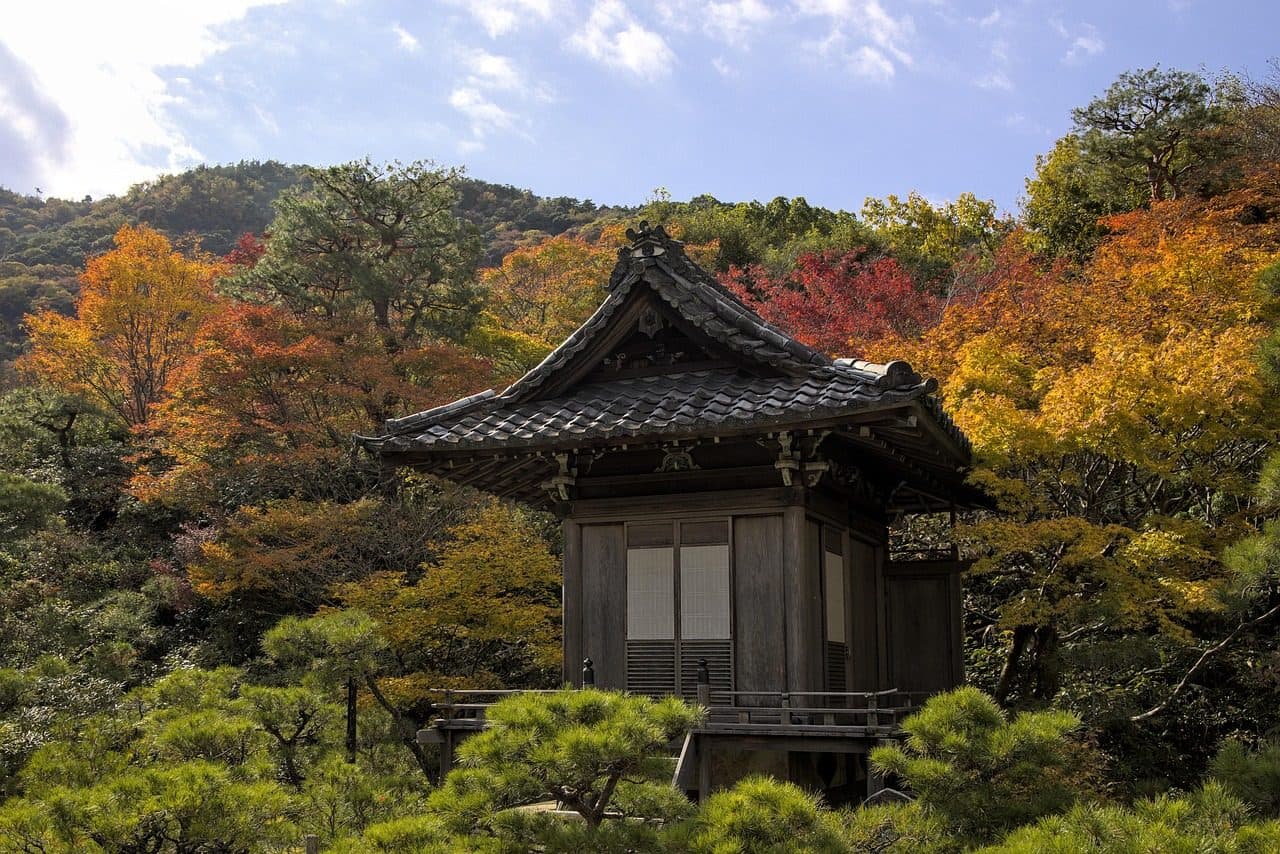
Tofuku-ji is a large Zen temple in south-east Kyoto whose wooden Tsutenkyo bridge looks down over a valley of maples. The usual peak is mid to late November into early December. Access: one stop from Kyoto Station to Tofukuji Station (JR Nara Line or Keihan Line), then a short walk. Suits: first-timers in Kyoto, photographers. Crowds: extreme at peak; photography is restricted on the bridge itself during the busy season. Go at opening time.
11. Eikando (永観堂, Zenrin-ji), Kyoto — the best known night viewing
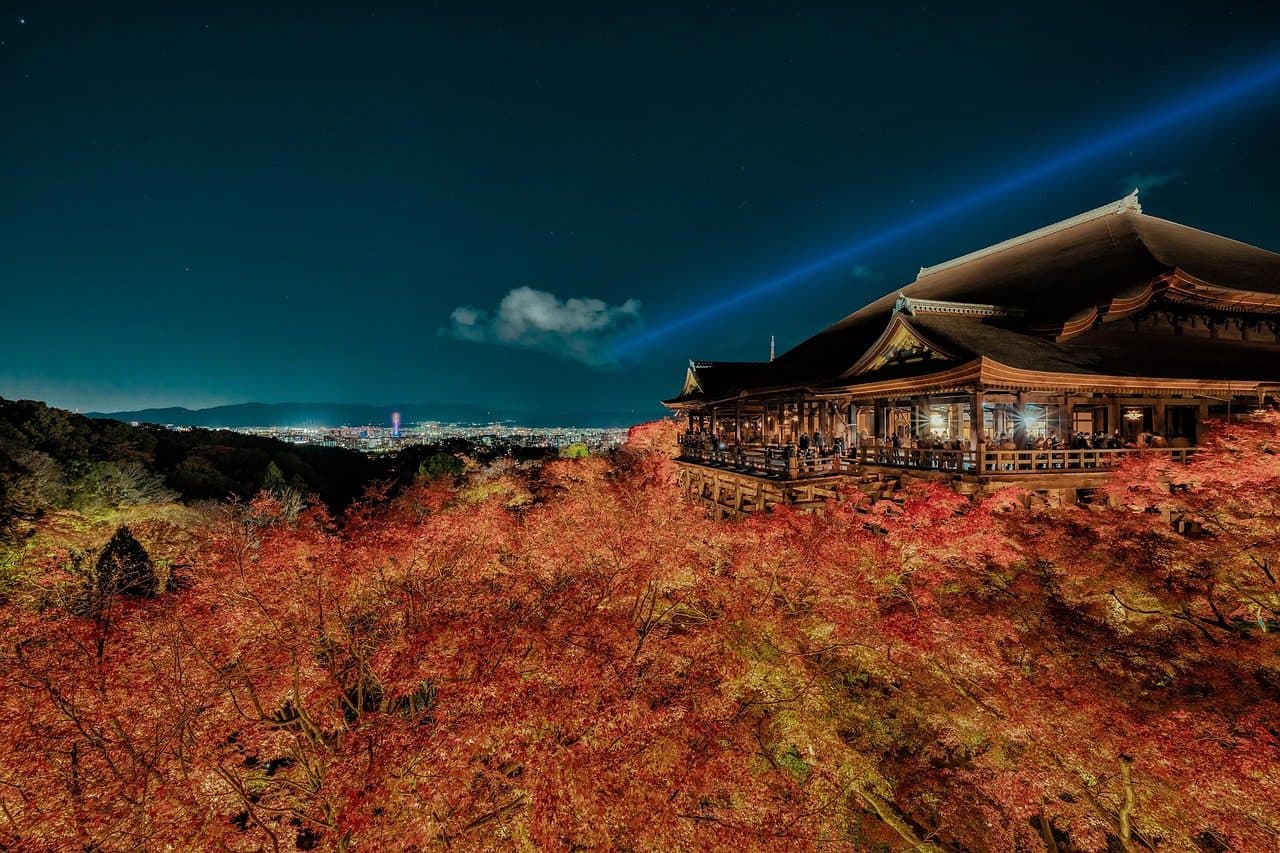
Eikando has been nicknamed "Momiji no Eikando" — Eikando of the maples — for centuries. Its pond garden and hillside pagoda are lit up in the evening during the autumn special viewing (夜間特別拝観), which has a separate ticket from the daytime visit. Usual peak: late November into early December. Access: a walk from Keage Station on the Tozai subway line, or the city bus; it sits near Nanzen-ji and the Philosopher's Path, so it is easy to combine. Suits: light-up fans, first-timers. Crowds: high, especially in the evening; expect a queue for the night viewing. For more Kyoto temples, dates and light-up details, see our Kyoto autumn leaves temple guide.
12. Central Kyoto and Osaka — the late finish
City-centre trees turn last. Japan Meteorological Corporation's first 2026 forecast puts maples at their best around 4 December in Osaka and 11 December in Kyoto. If your trip starts in December, this is your window: gardens and temples in central Kyoto, the Osaka Castle grounds, and Tokyo's gardens and ginkgo avenues in late November to early December. Suits: December travelers, people who already know the countryside spots will be over. Crowds: lower than the late-November peak.
Quick comparison: access, crowds and who it suits
| Spot | Usual / forecast peak | From Tokyo | From Osaka | Crowds | Best for |
|---|---|---|---|---|---|
| Daisetsuzan (Hokkaido) | Mid-Sept – early Oct (2026: past) | Flight | Flight | Low–moderate | Hikers, early October |
| Oirase Gorge (Aomori) | Usually late Oct | Shinkansen + bus, overnight | Too far | Moderate | Crowd-haters, walkers |
| Nikko (Tochigi) | Irohazaka ~Oct 31 (2026) | 1.5–2 h by train | Too far | High on weekends | Tokyo-based, late October |
| Lake Kawaguchiko | Usually late Oct – mid-Nov | About 2 h by bus | Too far | High on weekends | Mt Fuji views, light-ups |
| Korankei (Aichi) | Usually mid–late Nov | Via Nagoya | Via Nagoya | Very high on weekends | Light-ups, Tokyo–Kyoto stopover |
| Miyajima (Hiroshima) | ~Nov 19 (2026) | Long day; better overnight | About 2.5 h total | High at midday | First-timers in the west |
| Minoo (Osaka) | Usually mid–late Nov | Too far | About 30 min | Moderate | Half day from Osaka |
| Mt Takao (Tokyo) | ~Nov 22 (2026) | About 50 min | Too far | Very high on weekends | Half day from Tokyo |
| Arashiyama (Kyoto) | ~Nov 24 (2026) | About 2 h 15 min to Kyoto | About 1 h | Extreme at peak | First-timers |
| Tofuku-ji (Kyoto) | Usually mid-Nov – early Dec | Via Kyoto | About 1 h | Extreme at peak | Photographers |
| Eikando (Kyoto) | Usually late Nov – early Dec | Via Kyoto | About 1 h | High, esp. evenings | Night viewings |
| Central Kyoto / Osaka | Osaka ~Dec 4, Kyoto ~Dec 11 (JMC) | Via Kyoto | In town | Lower | December trips |
Three sample combinations that are hard to get wrong
Plan A — Late October to early November: Tokyo + Nikko + Kawaguchiko
Base yourself in Tokyo. Do Nikko as a day trip (or one night by Lake Chuzenji) around the end of October, then Kawaguchiko a few days later as the color moves down from the mountains to the lakes. Avoid both on Culture Day, 3 November. If you are torn between Nikko and Hakone for your one mountain day, our Hakone vs Nikko comparison helps — for autumn color specifically, Nikko usually turns earlier and more intensely. Kyoto will still be mostly green this early in 2026, so if your route continues west, go for the temples rather than the leaves.
Plan B — Mid to late November: Tokyo → Korankei → Kyoto → Miyajima
This is the 2026 sweet spot. Start in Tokyo with Mt Takao on a weekday (forecast ~22 November), take the Shinkansen to Nagoya and visit Korankei for an afternoon and its light-up, then continue to Kyoto for Arashiyama, Tofuku-ji and Eikando. Add Miyajima (~19 November) either at the start, flying in to Hiroshima, or as a day trip from Kyoto or Osaka. Keep 21–23 November for less famous spots or a non-foliage day.
Plan C — Late November to early December: Kyoto and Osaka slow trip
Stay in one Kansai base for five or six nights. Do the outskirts first (Arashiyama, Minoo), then move into central Kyoto temples and night viewings, and finish with Osaka's city trees in early December. Fewer train hours, more mornings at temples before the crowds, and a good chance of catching a peak somewhere every day.
If your route covers Tokyo, Kyoto and Hiroshima in one trip, check whether a rail pass makes sense for your itinerary — our guide Is the Japan Rail Pass worth it? walks through the maths.
Practical tips for autumn leaf trips
- Mornings win everywhere. The famous spots are calm before 8:30 a.m. and crowded by late morning. Plan one big spot per morning.
- Check the live status, not just the forecast. Weathernews and tenki.jp publish color reports by spot during the season, and many temples post photos of current color on their official sites or social media.
- Night viewings have separate tickets and dates. They are set by each temple each year; check the temple's site the week you travel.
- Pack layers. Mountain spots such as Nikko and Oirase can be close to freezing in the morning in late October, while Kyoto afternoons can still be mild.
- Book accommodation early for late November in Kyoto. It is one of the busiest weeks of the year for domestic travel.
- Use names in Japanese when asking for directions. Showing 紅葉 (koyo, autumn leaves) plus the spot name in Japanese — for example 東福寺 or 河口湖 — helps bus drivers and station staff point you the right way.
When is the best time to see autumn leaves in Japan in 2026?
For Tokyo and Kyoto, late November. Weathernews forecasts Mt Takao around November 22 and Arashiyama around November 24, 2026, later than usual. For mountain areas such as Nikko, late October to early November.
Where can I see autumn leaves in Japan in October?
Go north or up into the mountains: Hokkaido in early October, Oirase Gorge in Aomori and the Japanese Alps in mid to late October, and Nikko around the end of October (Irohazaka forecast around October 31, 2026).
What is the best autumn leaves day trip from Tokyo?
Nikko for late October to early November, Lake Kawaguchiko for maples with Mt Fuji in late October to mid-November, and Mt Takao for late November. Mt Takao is the easiest at about 50 minutes from Shinjuku.
Where are the best autumn leaves near Osaka?
Minoo Park is about 30 minutes from Osaka-Umeda by Hankyu Railway and usually peaks in mid to late November. Kyoto (Arashiyama, Tofuku-ji, Eikando) is about an hour away, and Miyajima works as a long day trip or overnight.
Will I see autumn leaves in Kyoto in early November 2026?
Probably only a little. The 2026 season is running late, and most of Kyoto's famous temples are expected to peak from late November into early December. In early November, go to higher ground or to Nikko and the Alps instead.
Which autumn leaves spots are least crowded?
Of the spots in this guide, Oirase Gorge, the Hokkaido foothills and Minoo on a weekday are the calmest. In Kyoto, any famous temple is much quieter at opening time than after 10 a.m.