This article contains affiliate links. If you book through them we may earn a small commission at no extra cost to you — it helps keep Authentic Japan free.
Arashiyama has more autumn color within walking distance of a train station than almost anywhere in Kyoto — a river, a mountainside, a bamboo grove and a string of small temples, all inside about two kilometres. That is also why it fills up. The difference between a good day here and a frustrating one is mostly the order you do things in and the time you arrive. This guide gives a timed route for autumn 2026, the fees for each stop, and where the forecast puts the peak. Fees and dates were checked against each temple's official website on 10 October 2026; confirm again the day before you go.
When to go: Weathernews' second forecast (8 October 2026) puts Arashiyama's peak from around November 24. Two dates sit either side of that: Tenryu-ji opens its garden early, at 7:30, from November 14 to 30, and the 2026 calendar has a three-day weekend from November 21 to 23. The best-value window is therefore the weekdays of November 24–27: the color should be at or near peak and Tenryu-ji's early opening is still running. For how Arashiyama fits with the rest of the city's light-ups, see the Kyoto autumn temples guide.
The route at a glance
| Time | Stop | Why then | Adult fee |
|---|---|---|---|
| 7:15 | Arrive at Saga-Arashiyama Station (JR) | Ahead of the first tour buses | — |
| 7:30–8:30 | Tenryu-ji garden (early opening Nov 14–30) | The garden before the crowds; the pond and hillside are at their calmest | ¥500 |
| 8:30–9:00 | Bamboo grove, via Tenryu-ji's north gate | Still walkable before mid-morning | Free (daytime) |
| 9:00–9:45 | Okochi Sanso (optional) | Hilltop garden with a tea break | Check on the day |
| 10:00–12:00 | Sagano temples: Jojakko-ji, Nison-in, Gio-ji | Mossy, smaller, and quieter than the river side | ¥600 / about ¥500–600 / ¥500 |
| 12:00–13:00 | Lunch in Saga or back toward the station | Avoid the riverside lunch peak | — |
| 13:00–15:00 | Togetsukyo Bridge, the Katsura River, Hogon-in | Afternoon light on the hillside | Hogon-in: check 2026 fee |
| 15:00–16:30 | Adashino Nenbutsu-ji or a river boat | Quiet end, or the river view | ¥500 |
The logic: the bamboo grove and Tenryu-ji are the two places everyone visits, so do them first, before about 9:00. The Sagano temples to the north are where you can slow down mid-morning, because most day-trippers turn back at the end of the grove. The riverside and Togetsukyo Bridge are busiest in the middle of the day, but they are open spaces and cope with crowds better than the narrow paths do, so they go in the afternoon.
Morning: Tenryu-ji and the bamboo grove
Tenryu-ji — use the 7:30 early opening
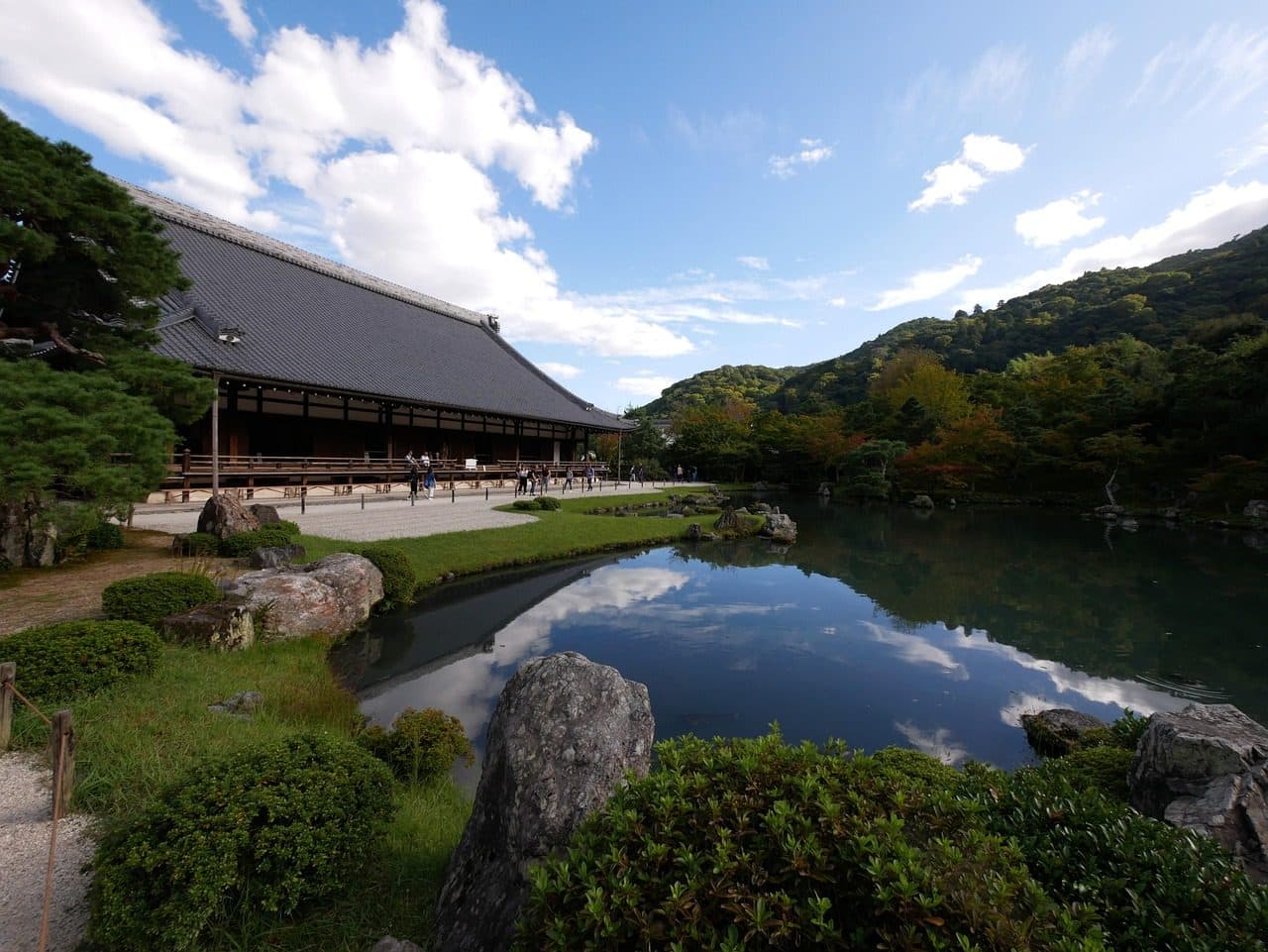
Tenryu-ji is a World Heritage temple and its Sogenchi pond garden, with Arashiyama's slopes behind it as "borrowed scenery", is the centre of autumn in this area. Garden entry is ¥500 for high school age and over (¥300 for elementary and junior high), with halls an extra ¥300 and the Hatto dragon ceiling painting an extra ¥500. Normal hours are 8:30–17:00 (last entry 16:50), but for autumn 2026 the temple has announced that the garden opens at 7:30 from November 14 to 30. That hour is the single most useful thing in this guide: you get the garden before the main crowd arrives, and the north gate leads straight out to the bamboo grove.
The bamboo grove — go straight after
The bamboo grove (Chikurin no Michi) is a public path with no daytime fee, and it is at its quietest early in the morning. Bamboo stays green, so this is not a foliage stop as such, but it sits between Tenryu-ji and the Sagano temples and you will walk it either way. One thing has changed in recent years: an evening event, Arashiyama Tsukitouro, lights part of the area and charges for entry in the evenings. Kyoto City's official guide lists it for October 1 to November 30, 2026. If you plan to walk the grove after dark, check whether the section you want is ticketed that night.
Okochi Sanso, at the top of the grove, is the former villa of a film actor, with a hillside garden and a matcha-and-sweet included in the entry. We could not confirm the current fee from an official source, so check at the gate; it is optional on this route but a good place to sit down before the walk north.
Late morning: the Sagano temples
North of the grove, the lanes of Oku-Saga lead to three small temples a few minutes apart. They are the reason to come to Arashiyama in autumn rather than just to the river: moss, maples and steps, at a scale where you can actually stop and look.
- Jojakko-ji — a temple built up a hillside, with a two-storey pagoda among maples and good views back over Kyoto. ¥600, 9:00–17:00 (last entry 16:30).
- Nison-in — known for its long, maple-lined approach, the "Momiji no Baba". Open 9:00–16:30 daily. The official site lists ¥500 for adults, but some 2026 travel listings show ¥600 — bring the higher amount.
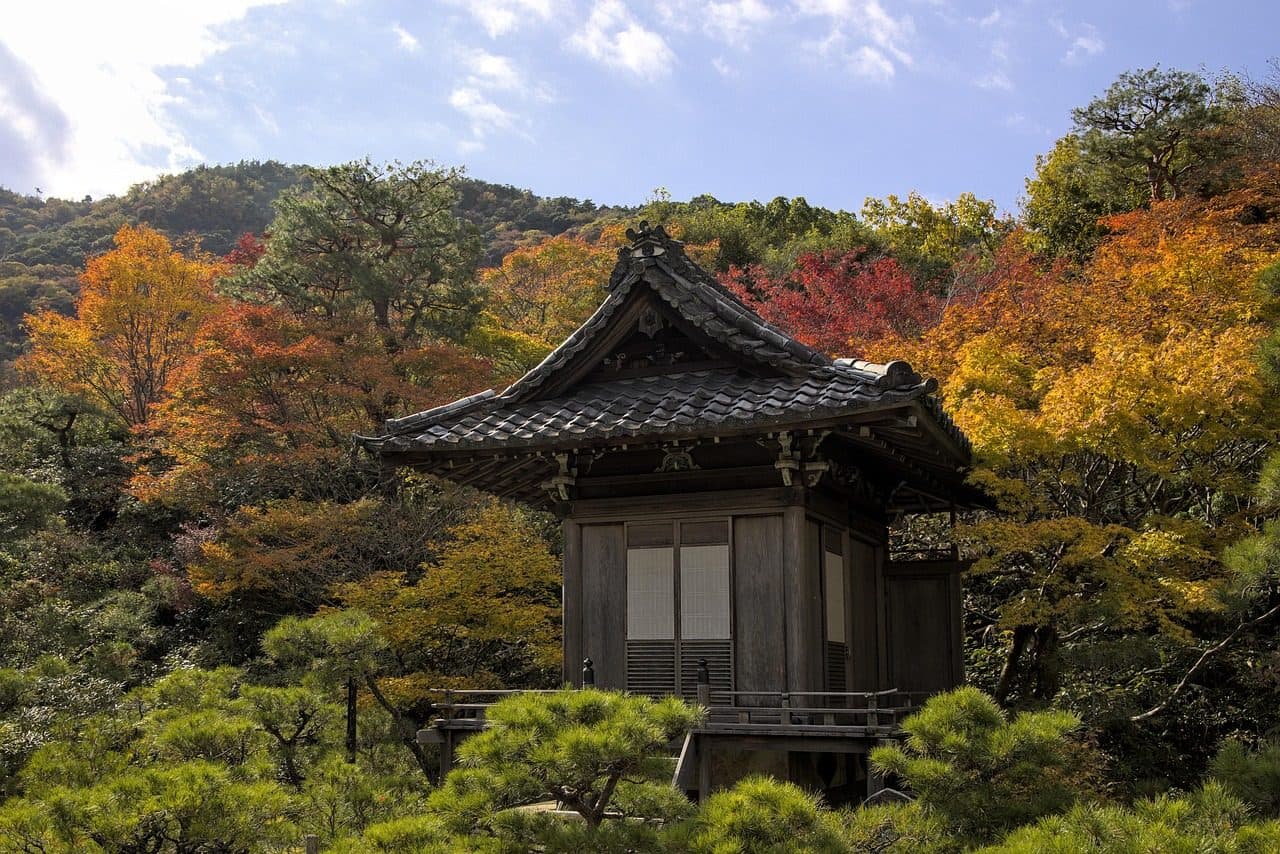
- Gio-ji — a small thatched hut and a garden covered in moss under maples; the most photographed of the three and the one that rewards slowing down. ¥500, 9:00–16:30 (last entry). A ¥1,000 joint ticket with Daikaku-ji is available for adults (it does not include Daikaku-ji's Osawa Pond).
If you have energy left in the afternoon, Adashino Nenbutsu-ji is another ten to fifteen minutes up the old Saga-Toriimoto street. It is known for thousands of small stone statues and a short bamboo path of its own. ¥500 for adults (¥400 for junior and senior high), 9:00–16:30 last entry (15:30 from December to February).
Afternoon: the river, Togetsukyo and Hogon-in
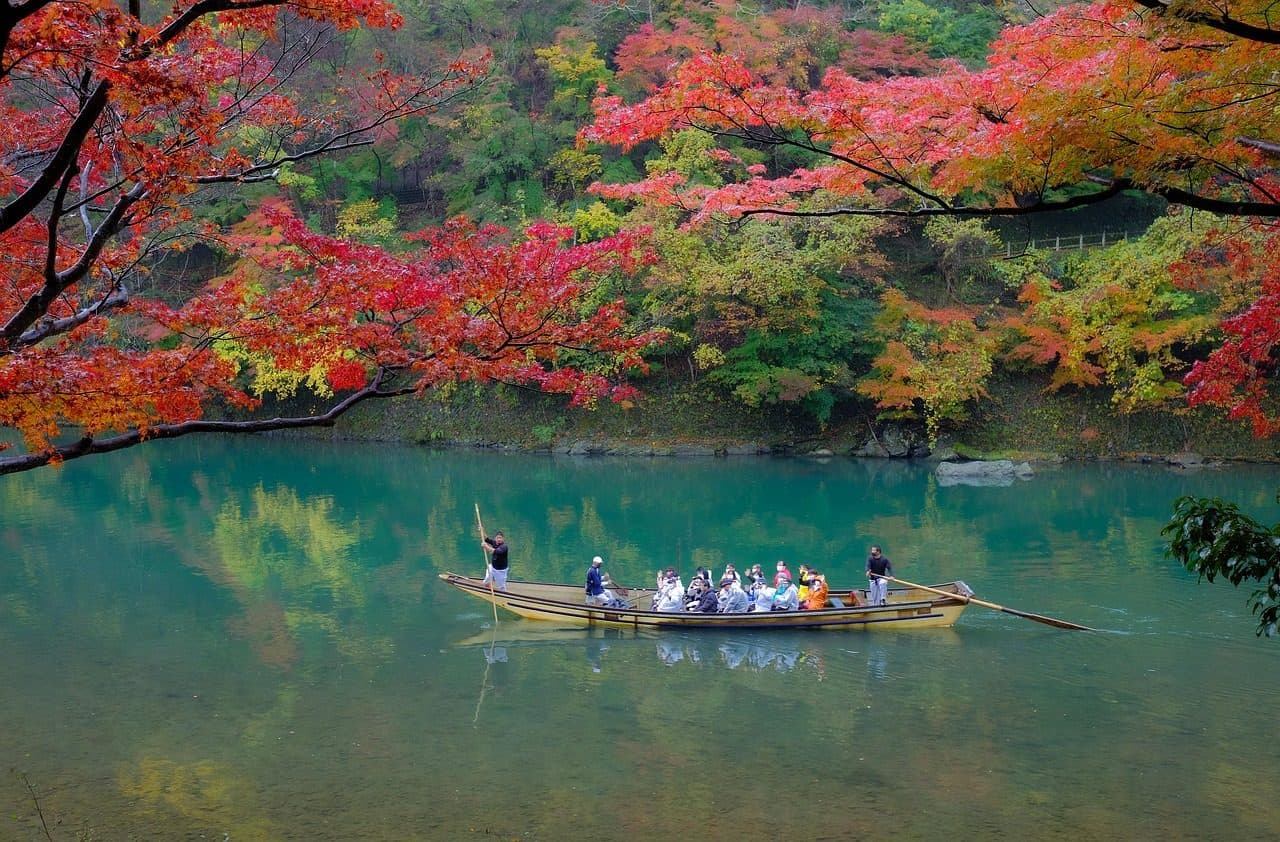
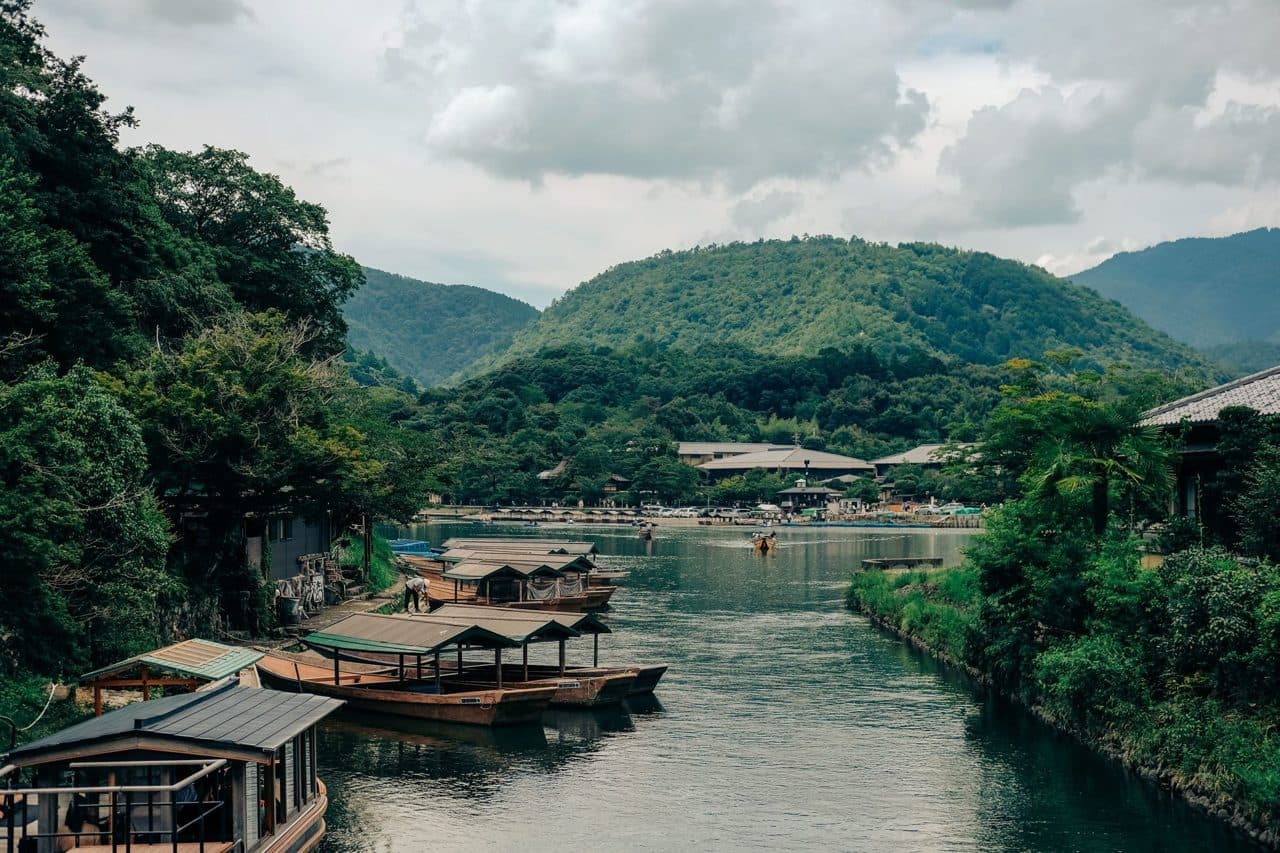
Walk back down toward the Katsura River for the view everyone recognises: Togetsukyo Bridge with the Arashiyama mountainside behind it. In late November the hillside is the color, and the afternoon light falls on it from the west side of the river. This part of Arashiyama is busy all day, but it is open ground, and the riverbank on the south side of the bridge is usually easier than the bridge itself.
Hogon-in, a sub-temple of Tenryu-ji, is normally closed and opens only for seasonal special viewings. Its autumn 2026 special opening runs from October 3 to December 6; on some days the main hall's paintings cannot be viewed because of memorial services. Hogon-in has held an evening light-up in past autumns, but as of 10 October 2026 the 2026 evening dates, fee and booking rules had not been published on its official site — check before planning an evening around it.
Seeing it from the water
The other way to see the gorge is the Hozugawa river boat, which runs about 16 km down the river from Kameoka into Arashiyama in about two hours, for ¥6,000 per adult on the regular shared boat. It works best as the start of an Arashiyama day: take the train or the Sagano Romantic Train up to Kameoka in the morning, ride the boat down (how to book and when to arrive), and walk the route above in the afternoon. In winter the boats run without covers rather than heated, so dress warmly from December.
Getting there and back
| Line | Station | Best for |
|---|---|---|
| JR Sagano (San-in) Line from Kyoto Station | Saga-Arashiyama | Starting at Tenryu-ji or the bamboo grove; the fastest from Kyoto Station (about 15 minutes) |
| Randen (Keifuku) tram | Arashiyama | Arriving from the north-west of the city; stops right on the main street |
| Hankyu Arashiyama Line | Arashiyama | Coming from central Kyoto (Kawaramachi, Karasuma) or Osaka; the station is south of Togetsukyo Bridge |
All three cost a few hundred yen from central Kyoto. The practical tip is to arrive on the JR line in the morning and leave on Hankyu in the afternoon, so you never have to walk back on yourself through the busiest street. If you are still working out how to get into Kyoto itself, the Kyoto arrival guide covers the airport and Shinkansen options, and getting around Kyoto explains why the train beats the bus to Arashiyama in autumn.
If it rains, or if you only have half a day
- Rain: the Sagano temples and Gio-ji's moss garden are, if anything, better in light rain, and the crowds thin out. Skip the river boat in heavy rain and check whether it is running.
- Half a day (morning): Tenryu-ji at 7:30 → bamboo grove → Jojakko-ji and Nison-in → back to Saga-Arashiyama by noon.
- Half a day (afternoon): start at Gio-ji and Nison-in, walk down to Tenryu-ji (the garden is open until 17:00, last entry 16:50) and finish at Togetsukyo Bridge.
- Wearing kimono: the route is mostly paved and level until the Sagano temples, which have steps. Many people rent in Gion or near Arashiyama Station and keep to the riverside and the bamboo grove.
Mistakes that spoil an Arashiyama autumn day
- Arriving at 10:00 and starting at the bamboo grove. By then it is shoulder to shoulder. Start at Tenryu-ji's early opening, or start at the far end (Gio-ji) and walk back.
- Going on November 21–23. The three-day weekend is the most crowded stretch of the season. The weekdays after it are both quieter and closer to the forecast peak.
- Assuming everything is in Tenryu-ji's ticket. The garden, the halls and the Hatto painting are three separate fees, and every Sagano temple charges its own entry.
- Planning the evening around an event that has not been announced. Light-ups change year to year. Hogon-in's 2026 evening details and the Tsukitouro section fees should be checked on the day.
When is the best time to see autumn leaves in Arashiyama in 2026?
Weathernews' forecast from 8 October 2026 puts Arashiyama's peak from around November 24. The weekdays of November 24–27 combine near-peak color with Tenryu-ji's 7:30 early garden opening (November 14–30), and avoid the November 21–23 three-day weekend.
How early does Tenryu-ji open in autumn 2026?
Tenryu-ji opens its garden at 7:30 from November 14 to November 30, 2026, instead of the usual 8:30. Garden entry is ¥500 for high school age and over.
Is the Arashiyama bamboo grove free?
Walking the bamboo grove path in the daytime is free. In the evenings, the Arashiyama Tsukitouro light-up event (listed by Kyoto City for October 1 to November 30, 2026) charges for entry to part of the area.
Which Arashiyama temples are best for autumn leaves?
Tenryu-ji for the classic pond garden with the mountainside behind it, and the smaller Sagano temples — Jojakko-ji, Nison-in and Gio-ji — for maples and moss at a quieter, more intimate scale. Hogon-in also opens specially from October 3 to December 6, 2026.
How long do you need in Arashiyama?
A full day is comfortable for Tenryu-ji, the bamboo grove, the three Sagano temples and the river. With half a day, pick either the Tenryu-ji and bamboo grove morning or the Sagano temples and riverside afternoon.
Is the Hozugawa river boat worth it in autumn?
It is the best way to see the gorge itself rather than the town. The ride takes about two hours from Kameoka to Arashiyama and costs ¥6,000 per adult on the regular boat, so it works best as the start of an Arashiyama day.