This article contains affiliate links. If you book through them we may earn a small commission at no extra cost to you — it helps keep Authentic Japan free.
Autumn color in Japan is easier to plan than cherry blossoms. It moves slowly — from the cold, high north in September to warm southern cities in December — and a good spot usually stays good for a week or two rather than a few days. But 2026 is running late. Japan's two main private forecasters both published their first 2026 forecasts in early September, and both expect peak color later than usual across most of the country after a hot late summer.
The headline dates: Weathernews expects Arashiyama in Kyoto to peak around November 24, and Mt. Takao on Tokyo's western edge around November 22. If you have not booked yet, that is good news — late-November trips now sit close to the middle of the window. If you already booked early November for Kyoto, you will probably be early for the famous hillsides; the route section below shows where to put those days instead.
The 2026 forecast: the dates that matter
Two forecasts are worth knowing, and they measure different things. Weathernews forecasts named viewing spots — a specific gorge, mountain road or hillside. Japan Meteorological Corporation (JMC) forecasts reference trees in each city centre. Both are first-round forecasts from early September and are revised every week or two as the season develops.
| Spot | Region | Expected peak (Weathernews, Sept 2026) |
|---|---|---|
| Daisetsuzan Asahidake | Hokkaido | ~Sept 14 (already past) |
| Zao | Yamagata, Tohoku | ~Oct 17 |
| Kamikochi | Nagano, Japanese Alps | ~Oct 21 |
| Irohazaka road | Nikko, Tochigi | ~Oct 31 |
| Daisen | Tottori | ~Nov 1 |
| Miyajima | Hiroshima | ~Nov 19 |
| Mt. Takao | Tokyo | ~Nov 22 |
| Arashiyama | Kyoto | ~Nov 24 |
| Akizuki Castle ruins | Fukuoka | ~Nov 29 |
In the city centres, JMC's first forecast (2 September) puts maples at their best around November 29 in Tokyo, December 4 in Osaka and December 11 in Kyoto, with ginkgo turning gold a little earlier — around November 26 in Tokyo and November 27 in Kyoto. Those city dates run later than Arashiyama's for a real reason: a sheltered maple in a warm city centre and a river gorge on the edge of town do not turn on the same day. For Kyoto, read the two together as a window — roughly November 20 to early December, starting with the outskirts and finishing in the centre.
The regional timing map
| Region | Usual window | 2026 read | Best for |
|---|---|---|---|
| High Hokkaido (Daisetsuzan) | Mid-Sept to early Oct | Already past peak | The earliest serious color in Japan |
| Lowland Hokkaido and Sapporo | Oct to early Nov | Sapporo city maples ~Nov 7 | Lakes, onsen, road trips |
| Tohoku | Mid-Oct to mid-Nov | Zao ~Oct 17 | Gorges, castle parks, onsen valleys |
| Nikko and the Kanto mountains | Mid-Oct to mid-Nov | Irohazaka ~Oct 31 | The first big color near Tokyo |
| Japanese Alps and Nagano | Oct to Nov | Kamikochi ~Oct 21 | Mountain scenery, then old towns below |
| Tokyo | Late Nov to early Dec | Mt. Takao ~Nov 22; city ~Nov 26–29 | Gardens and ginkgo avenues |
| Kyoto and Kansai | Mid-Nov to early Dec | Arashiyama ~Nov 24; city ~Dec 4–11 | Temples, shrines and gardens |
| Hiroshima and Miyajima | Mid to late Nov | Miyajima ~Nov 19 | An island shrine framed by maples |
| Kyushu | Late Nov to Dec | Akizuki ~Nov 29 | Late-season routes |
The logic is simple once you see it: color starts high and north, then moves lower and south. If you want color in October, look north or up a mountain. If you want it in late November, look at the big cities of the south-west. Typhoon season is largely over by the time most regions peak, but mountain weather still changes fast in autumn — pack layers and something waterproof for anywhere above town level.
Kyoto and Kansai: temples, shrines and the late-November peak
Kyoto is the reason most visitors search for autumn leaves at all, and it earns the reputation: the color here is framed by wooden temple halls, moss gardens and shrine gates rather than open mountainside. The trade-off is crowds. In 2026 the peak lands on top of a three-day weekend — Saturday November 21 to Monday November 23 (Labor Thanksgiving Day) — when domestic visitors pour into the city. If your dates are flexible, the weekdays either side of it are noticeably easier.
Arashiyama
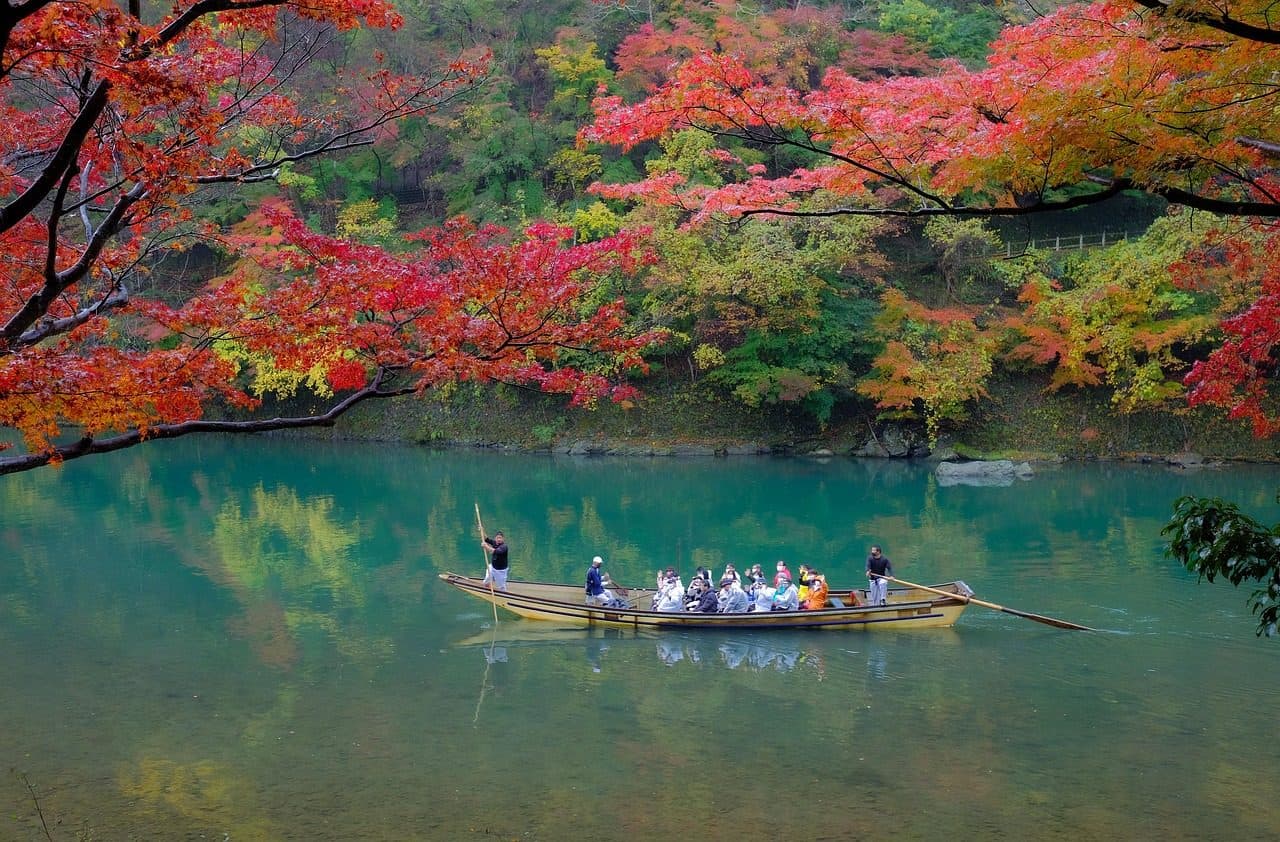
Arashiyama, on Kyoto's western edge, is where river, mountain and maples meet: the Togetsukyo Bridge across the Katsura River, the garden of Tenryu-ji, and wooded slopes that turn red and orange from about the third week of November. It is also one of the most crowded places in Japan on a peak weekend. Arrive before 8:30 in the morning and the bridge and riverbanks are a different place; by late morning, tour groups arrive and the main street slows to a shuffle.
The best way to see the gorge itself is from the water. The Hozugawa River boat ride runs from Kameoka down the Hozu River into Arashiyama — around two hours through a steep, wooded valley that most visitors standing on Togetsukyo Bridge never see. It ends right in Arashiyama, so it doubles as your arrival.
Shrines with autumn color
Kyoto's famous autumn scenes are mostly temples, but several shrines are just as good — and often calmer.
- Kitano Tenmangu — the shrine's Momiji-en maple garden along the old Kamiya River opens specially in autumn, with an evening illumination. One of the few places in Kyoto where a shrine, not a temple, is the autumn headline.
- Shimogamo Shrine (Tadasu no Mori) — the ancient forest around the shrine turns late, often into early December. A good fallback if you arrive after the famous hillsides have dropped their leaves.
- Kifune Shrine — in the mountains north of the city, reached by the Eizan Railway. Its lantern-lined stone steps are one of Kyoto's most photographed autumn scenes, and the altitude means it turns earlier than central Kyoto.
Eastern Kyoto temples
On the eastern side of the city, Eikando (Zenrin-ji) has been nicknamed "Momiji no Eikando" — Eikando of the maples — for centuries, and Tofuku-ji's Tsutenkyo bridge looks down over a valley of maples. Kiyomizu-dera holds special autumn night viewings. Many temples run evening illuminations (夜間特別拝観) during peak season, usually with separate tickets and their own dates; they are often the most atmospheric way to see the color and are worth checking on each temple's site before you go.
From Tokyo, the Shinkansen reaches Kyoto in about two hours and fifteen minutes, which makes a Tokyo-then-Kyoto route the natural late-November plan.
Nikko: shrines, a waterfall and the first big color near Tokyo
Nikko peaks weeks before Tokyo, which makes it the obvious late-October or early-November add-on — Weathernews has the Irohazaka road at around October 31. It combines ornate shrines (Nikko Toshogu and Futarasan Shrine) with forest, lakes and waterfalls about 1.5 to 2 hours from Tokyo. Lake Chuzenji is a 50-minute bus ride from the terminal in front of Tobu Nikko Station, and Kegon Falls drops almost 100 metres just beside it.
Nikko's strength is also its problem. When the color is good, the winding Irohazaka road up to the lake jams, and buses fall behind their timetables. A day trip works, but an overnight stay gives you early-morning light and a calmer return. Either way, pick one zone — Toshogu and the town, or the lake and falls — rather than trying to cover everything in a day.
Tokyo: late, easy and mostly gold
Tokyo peaks late, and its signature color is not red maple but gold ginkgo. The Meiji Jingu Gaien Ginkgo Avenue turns into a tunnel of yellow in late November, and gardens such as Rikugien and Shinjuku Gyoen add maples, with evening light-ups at Rikugien in season. For hillside color without leaving the city, Mt. Takao is about 50 minutes from Shinjuku on the Keio Line, with a forecast peak around November 22.
Tokyo works well for travellers who do not want to bet a whole day on one distant scenic spot — you can combine a morning garden, a food neighbourhood and a museum without any of it depending on a mountain bus. The downside is weekend crowding at the famous gardens and at Mt. Takao in particular. Go early, go on a weekday, and have a second garden in mind.
The Japanese Alps and Matsumoto
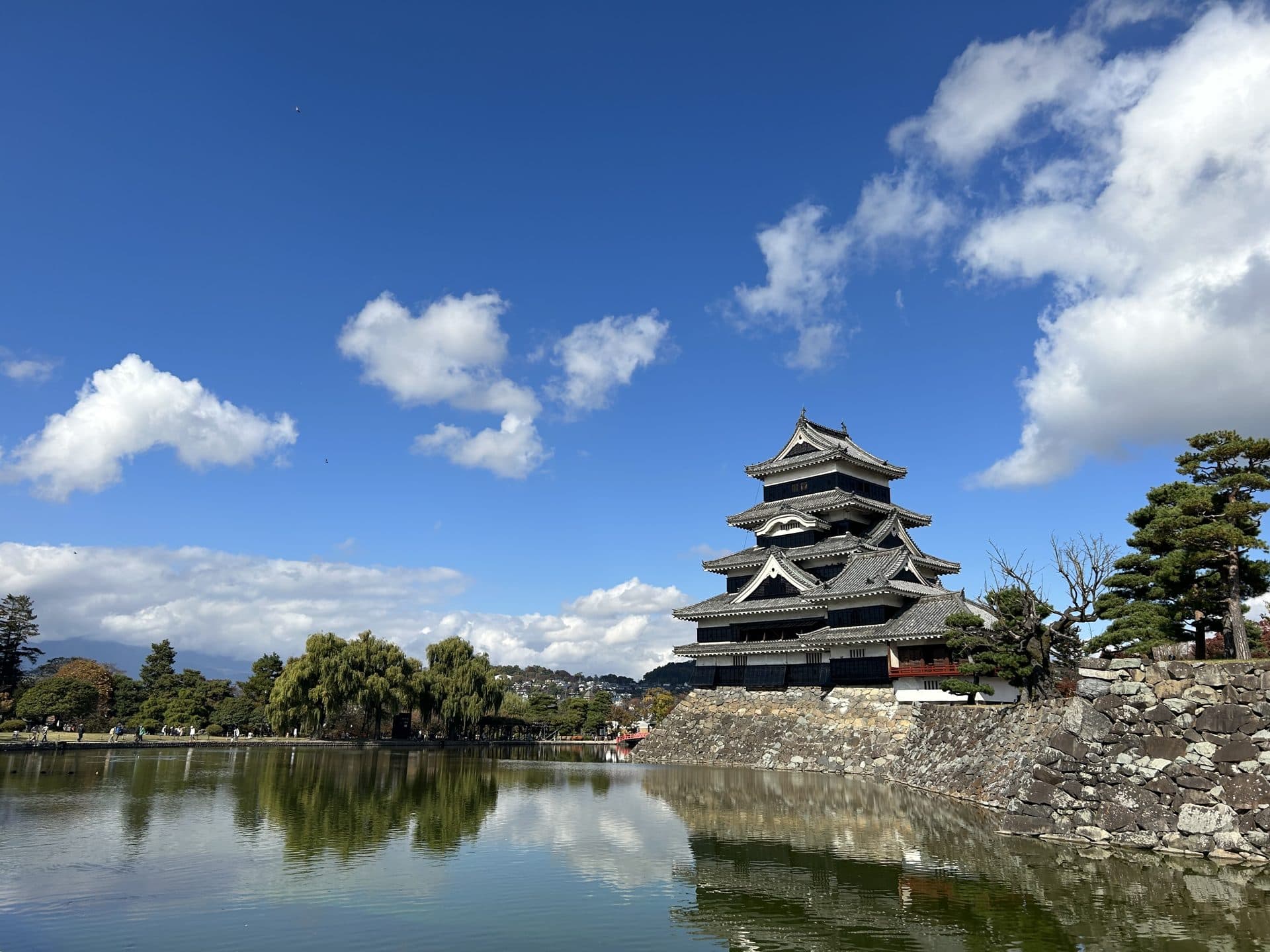
The Alps show autumn in layers. High up, Kamikochi is forecast to peak around October 21; ropeway areas and mountain passes turn around the same time. Down in the valleys and towns, the color arrives weeks later. That makes the region forgiving: if the heights are past their best, the towns below may be just starting. Matsumoto, with its black-walled castle, is a natural base for combining the two without spending every daylight hour in transit.
Hokkaido and Tohoku: already underway
Hokkaido starts first. Daisetsuzan's high slopes peaked around mid-September, and by November the mountains there can already be in winter conditions, with trails closing and snow arriving. Lower down, Hokkaido's lakes and onsen areas carry the color through October, and Sapporo's city maples are forecast for around November 7.
Tohoku is one of Japan's most underrated autumn regions — gorges, castle parks, onsen valleys and rural train lines, with far fewer foreign visitors than Kyoto. Zao is forecast for around October 17, and Hirosaki, better known for cherry blossoms, holds a chrysanthemum and autumn foliage festival at its castle park. Tohoku is also useful for sequencing: if Hokkaido is finished and central Japan is not ready yet, Tohoku fills the gap.
Hiroshima, Miyajima and the south
Miyajima pairs the island's famous shrine, Itsukushima, with Momijidani Park — "maple valley" — just behind it, and is forecast to peak around November 19, a few days before Kyoto. Further south, Kyushu is the late-season option: Akizuki's castle ruins in Fukuoka are forecast for around November 29, and volcanic landscapes and onsen towns hold autumn atmosphere into December. For repeat visitors who have already done Tokyo and Kyoto, a Fukuoka-and-onsen route is a quieter way to catch the end of the season.
Three 2026 routes, by when you arrive
- Late October to early November — go to the mountains. Tokyo, then Nikko (Irohazaka ~Oct 31) or the Alps (Kamikochi ~Oct 21, then Matsumoto). Kyoto will still be mostly green this early in 2026 — go for the temples, not the leaves.
- Mid to late November — the 2026 sweet spot. Tokyo (Mt. Takao ~Nov 22, the Gaien ginkgo avenue in late November), then Kyoto (Arashiyama ~Nov 24). If you add Miyajima (~Nov 19), do it before Kyoto rather than after. Avoid Kyoto's famous spots on November 21–23 if you can.
- Late November to early December — the cities. Central Kyoto and Osaka (city maples ~Dec 4–11), Shimogamo Shrine's forest, Tokyo's gardens, and Kyushu for the last of the season.
Mistakes that cost people the color
- Planning by city name instead of elevation. "Kyoto in November" can mean green hillsides in the first week and bare branches by the second week of December. Plan by region and altitude, then pick the city.
- Trusting a single forecast. The first forecast is a starting point. Check the spot's status a week before you go — and look for 見頃, not a calendar date.
- Ignoring Japanese holidays. Autumn is peak domestic travel season. In 2026, November 21–23 is a three-day weekend right on Kyoto's peak; Culture Day (Tuesday, November 3) also draws crowds to Nikko and the mountains.
- Forcing one famous spot. Autumn color is widespread. If a garden has a queue around the block, the shrine ten minutes away is often just as beautiful and half as busy.
When is the best time to see autumn leaves in Japan in 2026?
For the classic Tokyo and Kyoto trip, late November. Both of Japan's main forecasters expect 2026 to run later than usual: Weathernews puts Arashiyama in Kyoto around November 24 and Mt. Takao in Tokyo around November 22. For mountains such as Nikko and the Japanese Alps, late October to early November.
When will the autumn leaves peak in Kyoto in 2026?
Arashiyama on the city's edge is forecast for around November 24 (Weathernews), while reference maples in central Kyoto are forecast for around December 11 (Japan Meteorological Corporation). Treat roughly November 20 to early December as the window, and avoid the November 21–23 three-day weekend if you can.
Where can I see autumn leaves near Tokyo?
Mt. Takao (about 50 minutes from Shinjuku, forecast around November 22), Nikko (the Irohazaka road around October 31), and, inside the city, the Meiji Jingu Gaien Ginkgo Avenue, Rikugien and Shinjuku Gyoen in late November.
Is early November too early for Kyoto's autumn leaves?
In 2026, for most famous spots, yes. If you are in Japan in early November, head for Nikko or the Japanese Alps for color, and treat Kyoto as a temple visit rather than a foliage one.