This article contains affiliate links. If you book through them we may earn a small commission at no extra cost to you — it helps keep Authentic Japan free.
Planning a Japan cherry blossom trip is a timing problem disguised as a bucket-list dream. The photos make it look simple — arrive in spring, stand under pink trees, enjoy the season — but full bloom moves by region, altitude, and weather each year. A perfect week in Tokyo can be too early for northern Japan and too late for the south.
Japan's official 2027 sakura forecast hasn't been released yet. The Japan Meteorological Corporation (JMC) — Japan's main private forecaster for cherry blossoms — builds its forecast in stages, issuing more than a dozen updates as spring approaches (the 2026 season ran to 14 forecasts) with a final call landing close to the first blooms in Tokyo. Until that process starts for 2027, this guide uses the confirmed 2026 season and the well-established regional bloom order to help you plan now, with a clear plan for locking in exact dates once the real forecast lands.
When will the 2027 forecast actually come out
There's no fixed calendar date for the first release — JMC times its early estimates around that winter's temperature data, then revises them repeatedly through late winter and early spring as bud growth is observed. Two things you can plan around: the forecast only becomes reliable a few weeks before blossoms open in a given area, and JMC's cherry blossom forecast page is the place to check as 2027 approaches — bookmark it rather than searching for a single "2027 sakura date" answer months in advance.
The typical regional order, year to year
Exact dates shift with each winter's weather, but the sequence itself stays stable enough to plan around. Roughly:
- Kyushu, Shikoku, and southern Chugoku: usually first, mid-to-late March
- Tokyo, Kanto, and central Honshu (Hokuriku, Nagano): mid-to-late March through early April
- Tohoku: late March into mid-April
- Hokkaido: mid-to-late April, sometimes into early May
A warm late winter can pull the whole sequence forward by a week or more nationwide — as it did in 2026, below — while a cold, wet spring pushes it back. What doesn't change much year to year is the order: Hokkaido reliably comes last, Kyushu and Kansai reliably come first.
How the 2026 season played out
JMC's final 2026 forecast — released April 23, 2026, its 14th and last of that season — put several major cities ahead of their average-year flowering dates:
- Tokyo: flowering March 19, full bloom March 28
- Sendai: flowering March 31, full bloom April 4
- Kanazawa: flowering March 29, full bloom April 3
- Nagano: flowering March 31, full bloom April 6
- Fukuoka: flowering March 24, full bloom April 3
- Sapporo: flowering April 18, full bloom April 24
Treat 2026 as one useful data point, not a template to copy for 2027 — but it's a solid illustration of how far a mild late winter can shift the calendar nationwide, and of the regional order holding even when the whole season runs early.
What "flowering" and "full bloom" actually mean
Flowering (kaika) is the point when blossoms start to open — exciting for forecasts, but not the soft, cloudlike scene most travelers imagine. Full bloom (mankai) is closer to the moment people want for photos and picnics, and even then the best viewing day depends on wind, rain, temperature, and the tree variety. A storm right after full bloom can shorten the peak to a couple of days; cool weather can stretch it to a week.
JMC's forecasts run on temperature patterns going back to the previous autumn: buds form in summer, enter dormancy, then grow once dormancy breaks. The model combines autumn/winter low temperatures, tree growth status, cumulative temperatures, and each area's past data — which is why a simple average-date chart only gets you a starting window. The current season's weather decides the final shape.
Regional map for planning
Tokyo and Kanto
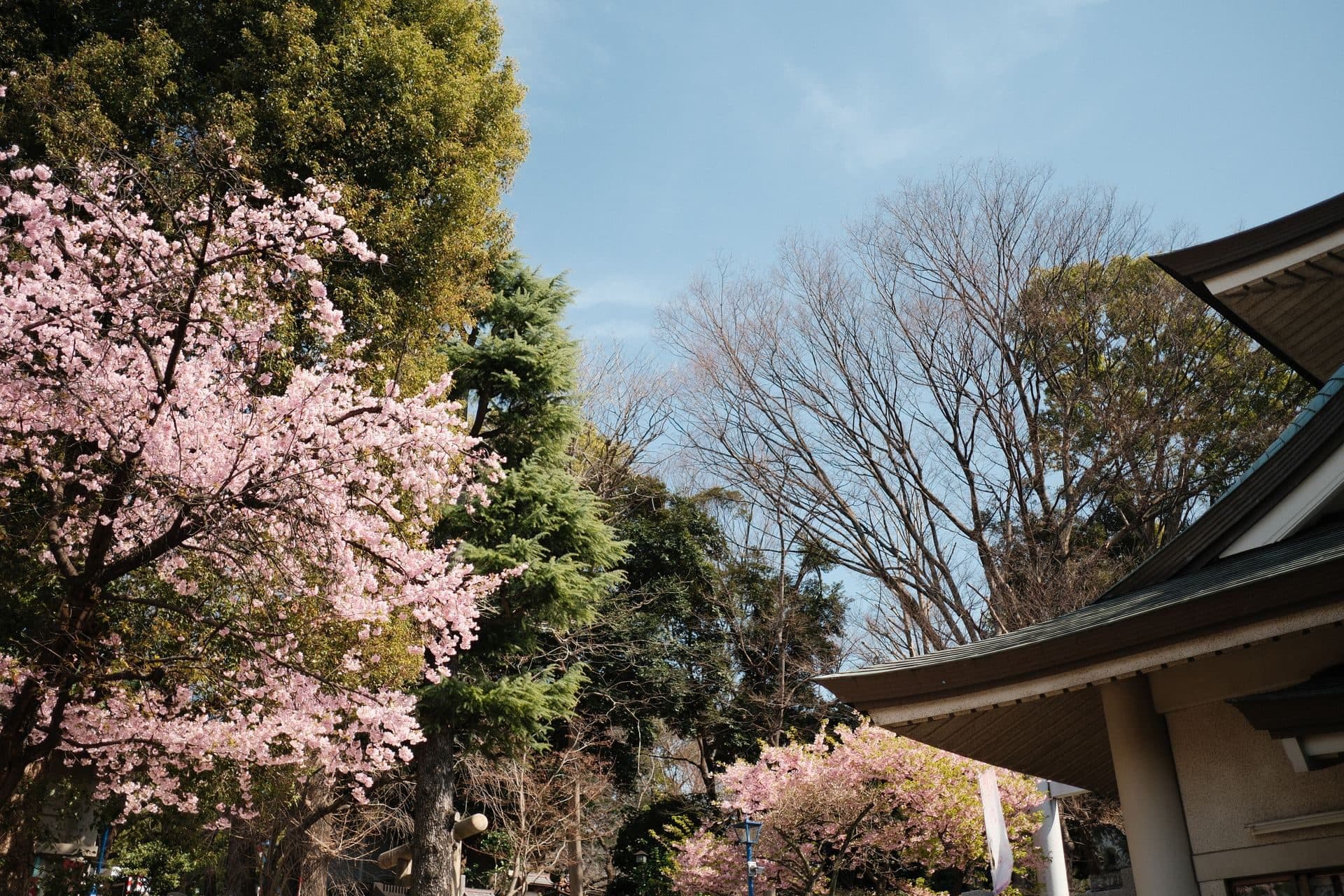
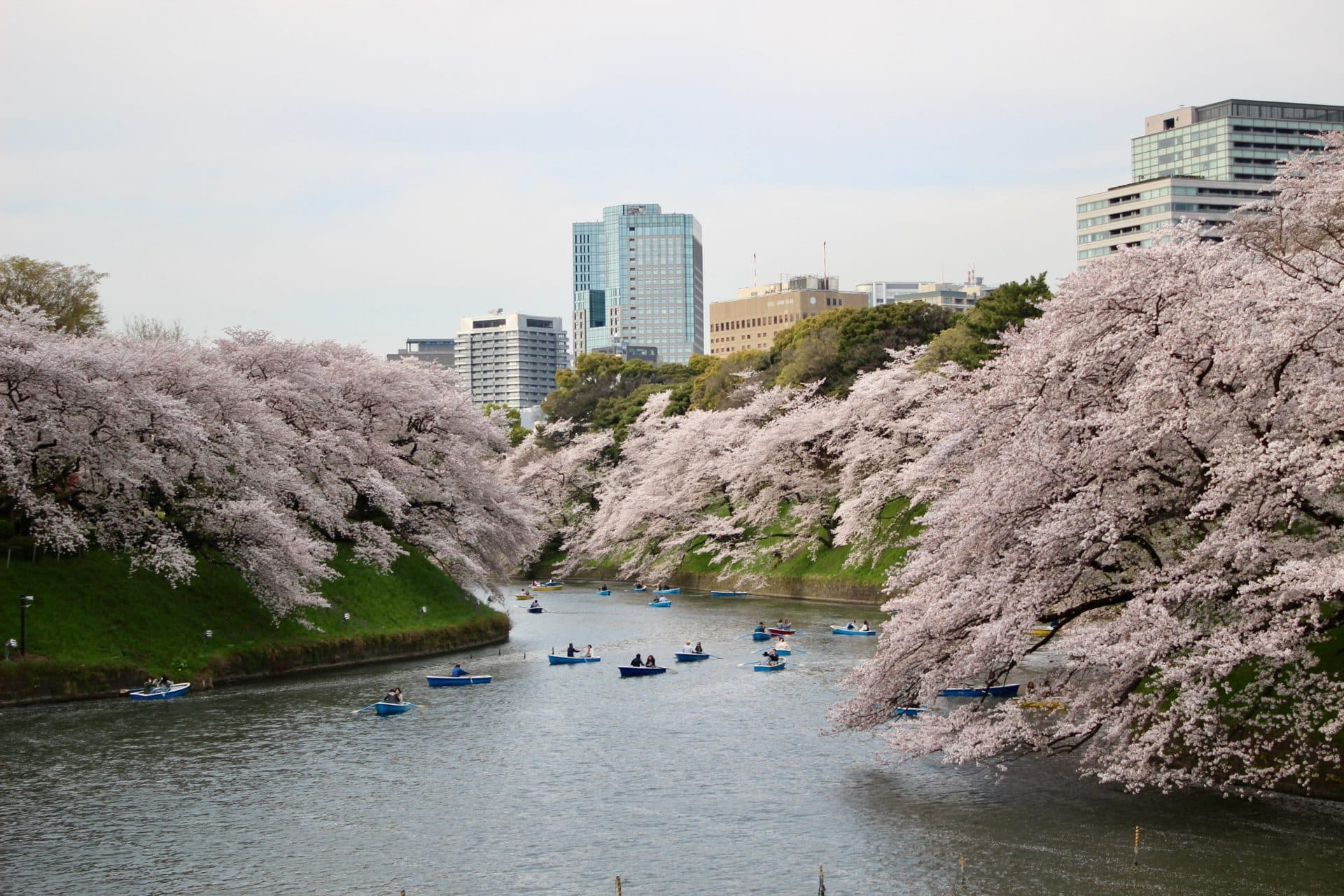
Tokyo is usually the easiest first cherry blossom destination — simple transport, and viewing styles from riverside walks to garden tickets to night illuminations. Hopping between Ueno, Meguro, and Chidorigafuchi in one day is a lot easier with a Suica IC card loaded before you land, rather than buying paper tickets at every station. In 2026, JMC's final forecast put Tokyo's flowering at March 19 and full bloom at March 28, a fairly typical mid-to-late March window; expect 2027 to land somewhere close unless that winter runs unusually warm or cold. It works best when you don't try to treat Ueno, Meguro, Shinjuku Gyoen, and Chidorigafuchi as mandatory: pick one major classic, one neighborhood walk, and one flexible food plan, and expect crowds at peak-bloom weekends. If you want more Kanto structure to build the trip around, a 3-day Tokyo itinerary is a reasonable base.
Kamakura can work as a side trip for temples, sea air, and slower streets, but don't assume it peaks the same day as central Tokyo — coastal weather and local tree conditions can differ by several days. A guided Kamakura and Enoshima day tour from Tokyo handles the transport if you'd rather not plan the trains yourself.
Tohoku
Tohoku is the answer once Tokyo's peak has passed and you still want sakura. In 2026, Sendai flowered March 31 with full bloom April 4, while Aomori ran later — flowering April 13, full bloom April 16 — a gap that shows up most years, not just 2026. The trade-off is accommodation and transport around famous spots: if you're targeting well-known castle parks or festivals, book lodging early rather than assuming same-day rooms. Spring in Tohoku can still feel cold, so pack layers, not just a light spring outfit.
Hokuriku and Nagano
Kanazawa and Nagano sit between the Tokyo rush and the northern late bloom. In 2026, Kanazawa flowered March 29 with full bloom April 3, and Nagano flowered March 31 with full bloom April 6 — both a few days behind Tokyo, which is typical. Kanazawa suits travelers who want gardens, seafood, and crafts in a compact city; Nagano works better if you're comfortable with cooler weather and mixing blossoms with mountain scenery. The hidden benefit of both is pacing — a slower alternative to chasing every famous Tokyo bloom spot in one day.
Chugoku, Shikoku, and Kyushu
Western and southern Japan usually bloom earliest, though not always uniformly — in 2026, JMC had Hiroshima flowering March 19 with full bloom March 30, Kochi flowering March 16 with full bloom March 31, Fukuoka flowering March 24 with full bloom April 3, and Kagoshima flowering March 27 with full bloom April 5. A southern city isn't automatically finished before Tokyo, and early flowering doesn't rule out a full bloom window that overlaps later locations — regional planning beats assumptions here. Kyushu is a strong choice for food and compact city travel, but don't build a trip around a single park if sakura is the only reason for going.
Hokkaido
Hokkaido is the late-season safety valve, reliably the last major region to bloom. In 2026, Sapporo flowered April 18 with full bloom April 24 — earlier than its average-year flowering date of May 1, but still well behind the rest of the country. This is the region for travelers who can't make late March or early April. It's also a different trip: cooler weather, different food culture, longer distances. For a fuller sense of what a Hokkaido trip outside ski season looks like, see the Hokkaido summer guide; don't tack it onto a Tokyo itinerary casually unless you have the days to spare.
How to build a blossom-safe itinerary
Three patterns cover most trips. Tokyo plus one backup region: spend five or six nights in Tokyo/Kanto and keep a two-night backup in Kanazawa, Nagano, or Sendai — this works well for first-timers because Tokyo stays useful even if blossoms disappoint. South-to-north: start in Kyushu, Chugoku, or Tokyo and move north as bloom reports develop; this needs more flexibility and works better with confidence booking rail on short notice, which is where a Japan Rail Pass earns its cost — unlimited changes as the bloom reports update.
Late-season Hokkaido: visit in late April or early May once earlier regions are done — useful if your vacation dates are fixed later in spring, though not a substitute for a classic Tokyo trip. Whichever pattern you pick, decide on rail coverage after the route is set: a rail pass only pays off if the itinerary actually includes enough long-distance travel, and IC cards plus individual tickets are enough for many blossom-focused trips.
What most travelers get wrong
The first mistake is treating a forecast date as a guarantee rather than a target — wind and rain can change the experience within a day. The second is overloading famous spots: cherry blossom season is partly about atmosphere — walking under trees, buying a snack, watching office workers pause for photos — and ten locations in a day works against that. The third is booking every hotel nonrefundable; if blossoms are the core purpose of the trip, a slightly more expensive refundable room is worth more than a perfectly optimized plan that can't move.
What to book early
Book international flights early if spring is your only possible season, and book hotels with cancellation terms you actually understand. Hold off on locking in special restaurant reservations until you know whether you want evenings free for night blossom viewing, and leave some afternoons open rather than filling the whole trip.
Final recommendation
For a first cherry blossom trip, build the itinerary around Tokyo or another major base, then add one regional backup that blooms earlier or later — checking the wider best-time-to-visit picture helps if sakura isn't the only season you're weighing. As 2027 gets closer, start checking JMC's official forecasts once they begin, and remember that the best sakura day usually isn't at the most famous place — it's the day the weather, the trees, and your own pacing line up.
Has the 2027 cherry blossom forecast been released yet?
Not yet. JMC issues its forecasts close to the season itself, typically starting a few months before bloom and updating repeatedly into spring — check JMC's official page as 2027 approaches rather than expecting a forecast this far in advance.
When did Tokyo cherry blossoms peak in 2026?
JMC's April 23, 2026 final forecast listed Tokyo flowering on March 19 and full bloom on March 28 — a useful reference point, not a prediction for 2027.
Should I book a 2027 Japan trip around one exact sakura date?
No. Book around a regional window and include at least two different viewing areas if blossoms are a priority — exact dates won't be forecastable with confidence until closer to spring 2027.
Is late March always the best time for Tokyo?
Often, but not always — it depends on how mild or cold that particular winter and early spring turn out to be. Treat it as the most likely window, not a fixed rule.
Can I see cherry blossoms in May?
Possibly in Hokkaido or higher, cooler areas, depending on the year and location — but don't expect Tokyo or Fukuoka blossoms in May.
Are festival dates the same as full bloom?
Not necessarily. Festivals are scheduled in advance and can miss the exact peak — treat them as a source of atmosphere, not proof of bloom timing.