This article contains affiliate links. If you book through them we may earn a small commission at no extra cost to you — it helps keep Authentic Japan free.
Convenience stores in Japan, usually called konbini, are not emergency snack stops — they're a reliable meal system. Breakfast before an early train, dinner after a delayed arrival, lunch before a day trip, a fallback when every restaurant nearby has a queue out the door.
The trick is knowing what each shelf is for. Onigiri is for speed. Bento is for a full meal. Refrigerated noodles beat a heavy rice box in summer. Hot-case snacks are a supplement, not dinner. Coffee is cheap and consistent. The common mistake is walking in hungry, grabbing whatever's closest, and leaving with three sweet breads when what you needed was protein and rice. Half of finding the right konbini in the first place is just navigating with a working connection — a Japan eSIM set up before you fly means you can pull up maps and translate labels the moment you land.
The Short Answer
First konbini meal in Japan: buy one onigiri, one protein-heavy side, one drink, and one dessert. That gives you the range without committing to a full bento.
- Tuna mayo or salmon onigiri
- Egg sandwich
- Karaage or grilled chicken from the hot case
- Bottled green tea or konbini coffee
- Seasonal pudding, cream puff, or fruit sandwich
For an actual sit-down meal instead, pick from these instead:
- Bento — rice plus a main dish, one tray
- Refrigerated noodles when it's hot outside
- Salad chicken plus a rice ball for something lighter
- Oden or soup in colder months, where available
What Onigiri and Rice Balls Actually Cost
Prices rotate and vary by region, so treat these as anchors rather than fixed numbers — check the shelf label in-store. As of July 2026, 7-Eleven's official onigiri page lists a hand-roll grilled salmon rice ball at ¥215 before tax (¥232 with tax). FamilyMart lists a plain salt omusubi at ¥139 before tax (¥150 with tax). Lawson lists a hand-roll tuna mayonnaise onigiri at ¥181, tax included. All three chains note that exact products and prices can differ by store and region.
Read those as a floor, not a ceiling: a basic rice ball runs a low couple hundred yen, premium seafood or meat fillings cost more, and the oversized "big" onigiri can approach the price of a small meal. For a closer side-by-side of what each chain actually does well beyond price, see our 7-Eleven vs. FamilyMart vs. Lawson comparison.
7-Eleven, FamilyMart, or Lawson: Which One?
7-Eleven
The safest all-rounder for rice-based meals — onigiri, bento, pasta, sandwiches, salads, coffee — plus an ATM that reliably takes foreign cards. If you're grabbing dinner after a long sightseeing day and don't want to think too hard, 7-Eleven's shelves are the most predictable of the three.
FamilyMart
Strongest on hot snacks, especially its Famichiki fried chicken, plus a wide omusubi range from plain salt rice balls to premium regional versions. FamilyMart also runs frequent seasonal collaborations, so it's worth scanning the shelf rather than defaulting to the same order every time.
Lawson
The desserts and premium onigiri chain, plus the health-focused Natural Lawson sub-brand in some urban areas. Lawson's own onigiri page separates premium, standard, and value tiers, which tells you roughly where the chain puts its effort.
Onigiri: The Easiest First Meal
Classic fillings: tuna mayo, salmon, kombu, ume plum, mentaiko, and various chicken or meat versions. The triangle-shaped ones are wrapped so the seaweed stays crisp and separate from the rice until you open them — pull tab one down, then remove the two side tabs. If the seaweed tears the first time, that's normal; the second one goes faster.
Not every onigiri is the crisp-seaweed triangle. Some are direct-wrapped, some use seasoned rice instead of plain, some are oversized meal-style versions, and some only appear in certain regions. If the package looks unfamiliar, it's probably still an onigiri.
Bento and Noodles: Choosing by Timing
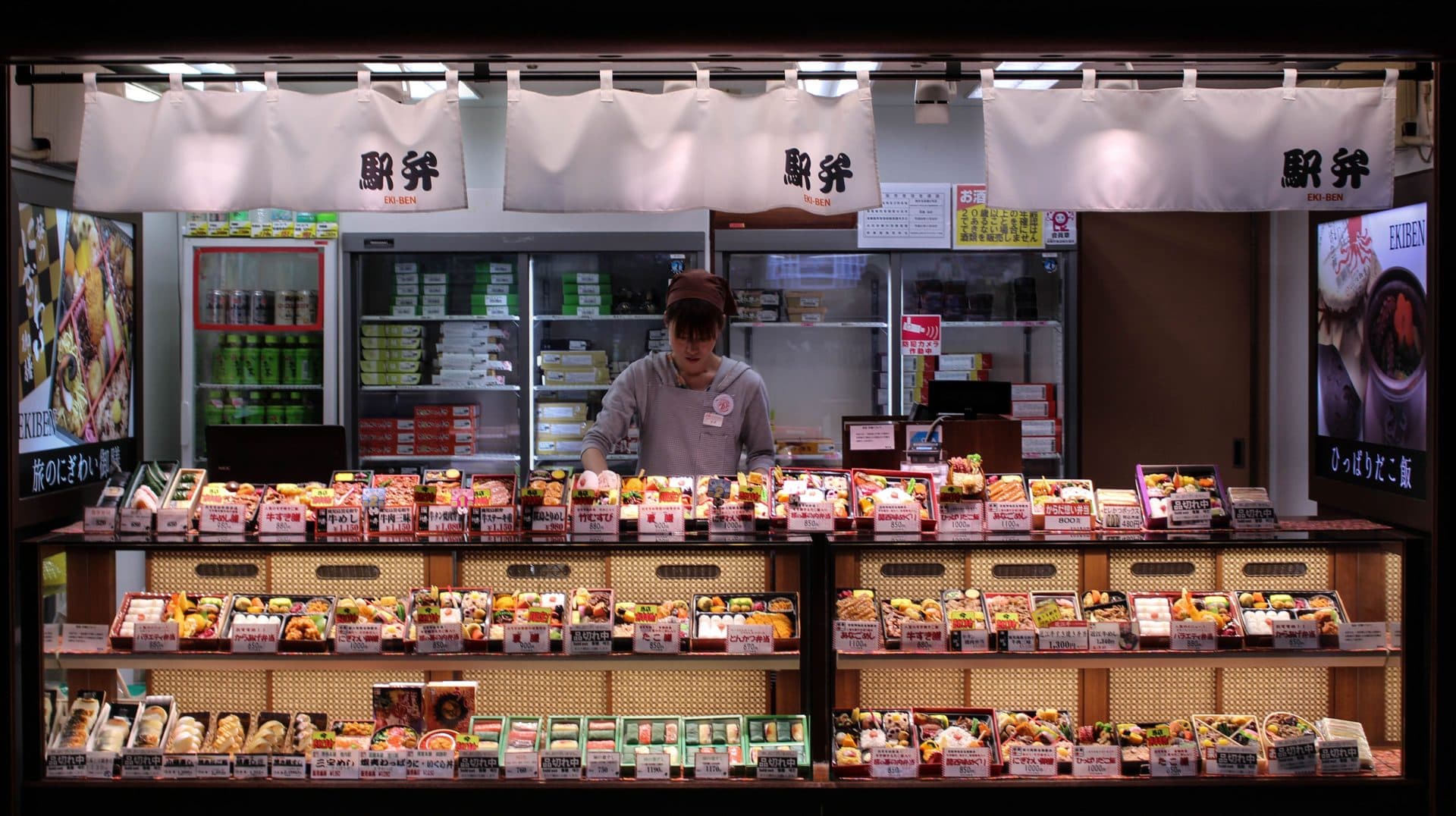
Most stores will heat a bento at the register — staff may ask "atatamemasu ka?" ("would you like it heated?"); a nod or "hai" is enough. Choose bento when you're eating back at the hotel, need dinner after restaurants close, or want rice, protein, and sides in one tray without carrying it for hours.
- Eating back at the hotel or somewhere you can sit
- Restaurants nearby are already closed
- You want a full tray — rice, protein, sides
- About to ride a crowded commuter train
- No seating available anywhere nearby
- Hot weather and you can't eat within the hour
- You only need a light breakfast
Refrigerated noodles are underrated — in humid weather, cold soba, udon, or chilled ramen beats a heavy bento. The sauce packet is separate; pour it over, add the toppings, mix. Check whether chopsticks are included before you walk off — most stores add them automatically, but not always.
Sandwiches, Hot Snacks, and Coffee
The egg sandwich earns its reputation: soft bread, creamy filling, nothing to heat. It's a solid first breakfast if your hotel doesn't include one. Sweet breads — melonpan, cream-filled buns, curry bread — are easy to overbuy; pair one with yogurt, a boiled egg, or salad chicken so breakfast doesn't crash by mid-morning.
The hot case near the register holds fried chicken, croquettes, hash browns, and seasonal skewers — order by pointing or naming the item, and staff will bag it separately. Treat it as a supplement (fried chicken plus onigiri, croquette plus salad), not the whole meal three days running. Konbini do more than sell food, too — see our list of surprising things you can do at a Japanese convenience store if you want the fuller picture.
Konbini coffee is one of the best-value small pleasures in Japan — buy a cup at the register or machine area, place it under the dispenser, pick hot or iced. For drinks, bottled unsweetened tea and water travel better through a long sightseeing day than soda. Alcohol is sold widely, but age rules apply, and drinking while walking through a crowded tourist street is not the norm here.
Labels, Allergens, and Dietary Limits
If you have a serious allergy or a strict dietary requirement, be careful — English labels aren't guaranteed on prepared food, and cross-contact isn't always disclosed even where Japanese allergen info exists.
- Dashi broth often contains fish
- Mayo-based items usually contain egg
- Bread and fried items often contain dairy
- "Vegetable" items may still use meat or fish stock
- Regional products can swap ingredients without warning
Where to Eat, and How Not to Cause Trouble
Some branches have eat-in counters; many don't. If there's no seating, take food back to the hotel or find a park where eating is normal. Trash bins can be hard to find after a konbini meal, so keep a small bag for wrappers — a habit that fits the broader local instinct around not causing trouble in public spaces.
- Buying too late — the best bento and sandwiches often sell through by evening
- Ignoring regional shelves — a rice ball in Hokkaido or Okinawa can differ from the Tokyo version
- Carrying a hot, strong-smelling snack onto a packed commuter train
- Forgetting to check the bag for chopsticks, a spoon, or a wet wipe before you leave
Four Meal Combos to Start With
| When | What to buy |
|---|---|
| Early train breakfast | Egg sandwich, yogurt or banana, hot coffee, bottled water |
| Budget lunch | Tuna mayo or salmon onigiri, salad chicken or boiled eggs, green tea, seasonal dessert |
| Hotel-room dinner | Heated bento, miso soup or salad, tea or water, pudding or fruit |
| Summer sightseeing | Cold noodles, sports drink, fruit cup, small dessert |
Final Advice
Konbini work best as part of the trip, not a novelty checklist. Grab breakfast before an early departure, pick up a low-odor lunch before a long train ride, use a bento when restaurants are shut, and try the seasonal desserts when you have room. The real value isn't novelty — it's control: eating quickly, cheaply, and predictably without losing an hour to a queue.
Is Japanese convenience store food actually good?
Yes — for a quick meal, onigiri, refrigerated noodles, bento, sandwiches, hot snacks, and coffee are usually reliable. The exact range varies by chain, region, and time of day.
Can I eat convenience store food inside the store?
Some branches have eat-in counters, but many don't. If there's no seating, take the food back to your hotel or eat somewhere eating is clearly permitted.
Are prices the same at every store?
No — 7-Eleven, FamilyMart, and Lawson all note that prices and product availability can vary by region and individual store, so treat posted chain prices as an estimate and check the shelf label in-store.