Cet article a été traduit automatiquement et peut contenir de légères inexactitudes. La version originale en anglais fait foi.
Cet article contient des liens affiliés. Si vous réservez via ces liens, nous pouvons percevoir une petite commission sans frais supplémentaires pour vous — cela nous aide à maintenir Authentic Japan gratuit.
La meilleure ville thermale près de Tokyo dépend moins du bain lui-même que du voyage que vous souhaitez construire autour. Hakone est la valeur la plus sûre pour un premier séjour : paysages de montagne, ryokan, musées, lac Ashi, et des transports pensés pour les visiteurs. Kusatsu est la ville onsen la plus pure — vapeur, soufre, bains publics, et un centre-ville piétonnier entièrement tourné vers la culture des sources chaudes. Nikko est différente : une destination classée au patrimoine mondial, entre sanctuaires et nature, où un séjour onsen rend le voyage plus lent et plus riche, mais où les bains ne sont pas la raison principale de venir.
Pour la plupart des primo-visiteurs, Hakone reste la recommandation la plus sûre. Pour les voyageurs qui veulent l'ambiance de ville thermale la plus marquante, Kusatsu vaut le trajet plus long. Pour ceux qui veulent temples, cascades, forêts de cèdres et air de montagne, Nikko offre le voyage le plus riche — consultez notre comparatif complet Hakone vs Nikko en excursion d'une journée si vous hésitez entre les deux uniquement sur les critères de coût et de temps de transport, sans l'angle onsen.
Décision rapide : quelle ville thermale choisir ?
Choisissez Hakone si c'est votre premier séjour onsen au Japon, si vous voulez la logistique la plus simple depuis Tokyo, ou si vous voulez une nuit en ryokan sans construire tout un itinéraire régional autour. Hakone dispose d'assez d'infrastructures orientées vers les visiteurs étrangers pour que vous puissiez vous tromper et vous rattraper facilement : bus, trains, musées, téléphérique, navettes de ryokan, aide aux bagages, et un circuit touristique clair.
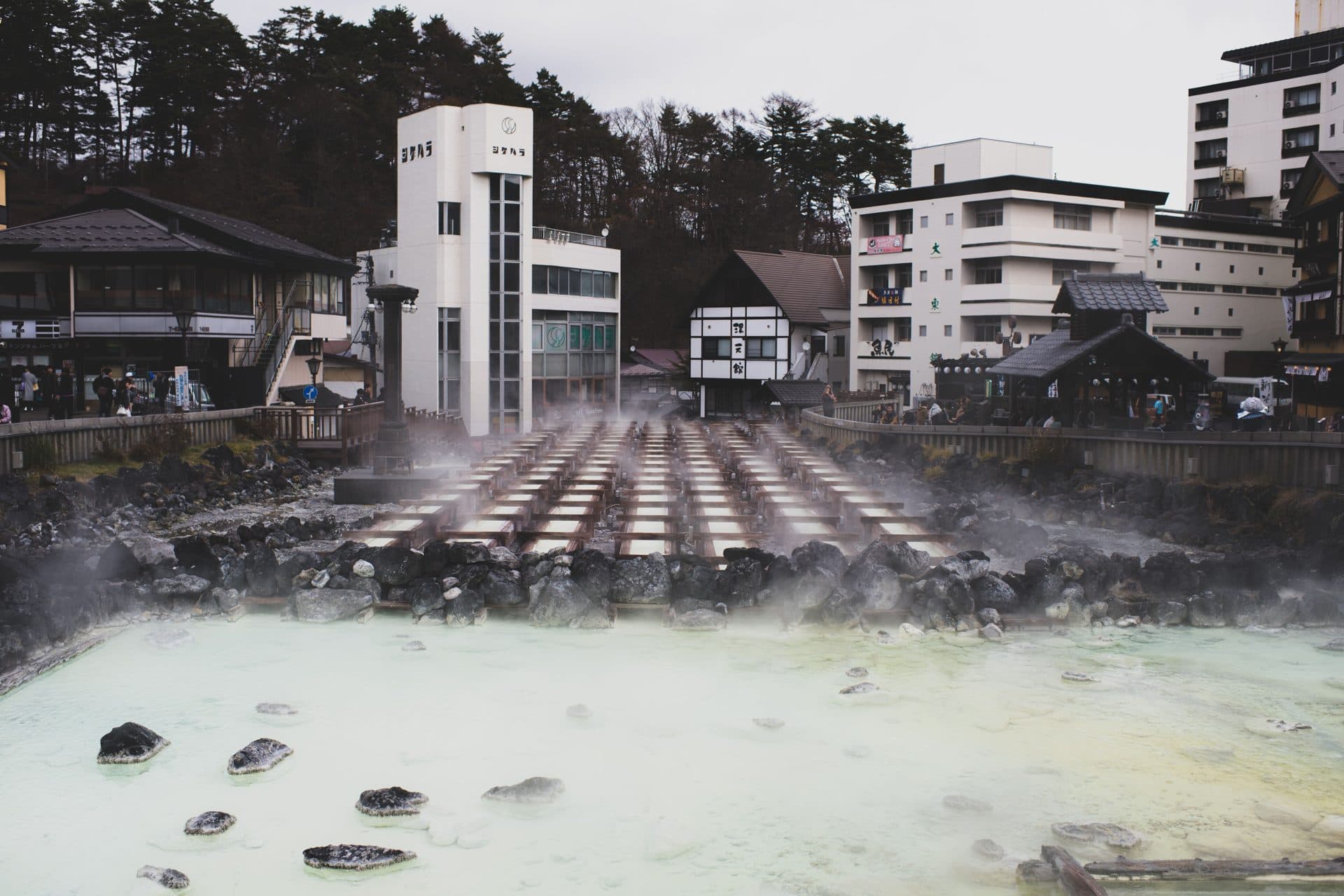
Choisissez Kusatsu si la source chaude elle-même est l'essentiel. La ville se niche en altitude dans les montagnes de Gunma, et son centre visuel est Yubatake, le champ d'eau chaude fumant où l'eau minérale est refroidie avant de s'écouler plus loin. Kusatsu ressemble moins à une collection de points d'intérêt qu'à une ville qui existe grâce à la source — c'est justement pour cela qu'elle récompense un séjour d'une nuit.
Choisissez Nikko si vous voulez l'onsen comme récompense après une journée culturelle. L'attraction principale reste le Nikko Toshogu, le complexe de sanctuaires classé au patrimoine mondial, ainsi que le lac Chuzenji, les chutes de Kegon et le parc national environnant. Les zones onsen comme Kinugawa, Yumoto Onsen et Okunikko sont plus agréables si vous accordez à Nikko plus qu'une journée expédiée.
Hakone : l'escapade onsen la plus simple depuis Tokyo
Hakone est la réponse la plus pratique pour de nombreux voyageurs car elle offre un écosystème touristique complet. Vous pouvez partir de Shinjuku, arriver à Hakone-Yumoto, vous enfoncer dans les montagnes, visiter un musée, prendre le téléphérique, voir le lac Ashi, et dormir en ryokan sans avoir besoin de voiture de location. Un bon séjour onsen doit sembler plus lent que Tokyo, pas comme une nouvelle journée de casse-tête logistique.
En juillet 2026, Odakyu proposait le Hakone Freepass depuis Shinjuku à 7 100 ¥ pour un adulte et 1 600 ¥ pour un enfant pour 2 jours, ou 7 500 ¥ pour un adulte et 1 850 ¥ pour un enfant pour 3 jours. Le pass couvre l'aller-retour depuis Shinjuku et un accès illimité aux transports désignés de Hakone ; le siège en Romancecar (express limité) nécessite un supplément aller simple séparé de 1 200 ¥.
Hakone convient particulièrement bien si une personne du groupe veut des sources chaudes et une autre des activités. Vous pouvez combiner un séjour en ryokan avec le musée en plein air de Hakone (Hakone Open-Air Museum), le lac Ashi, le sanctuaire Hakone, Owakudani, Gora, ou un bain de jour décontracté. Le musée est ouvert de 9h00 à 17h00 toute l'année, dernière admission 30 minutes avant la fermeture ; en juillet 2026, l'entrée adulte le jour même coûtait 2 000 ¥ et l'entrée adulte en ligne 1 800 ¥.
Pour un bain sans réserver de chambre, Hakone Yuryo près de Hakone-Yumoto fonctionne comme une source chaude accessible à la journée. En juillet 2026, le tarif adulte du bain public était de 1 700 à 1 800 ¥ en semaine et 2 000 à 2 200 ¥ les jours fériés, avec des horaires de 10h00 à 20h00 en semaine (dernière admission 19h00) et de 10h00 à 21h00 les jours fériés (dernière admission 20h00). Si vous n'avez jamais utilisé un bain public japonais, consultez d'abord notre guide de l'étiquette de l'onsen — l'ordre de rinçage et la politique sur les tatouages posent plus de problèmes aux débutants que la logistique elle-même.
Ce que la plupart des guides omettent sur Hakone
Hakone est simple, mais ce n'est pas minuscule. L'erreur classique est de réserver un ryokan uniquement sur le prix, puis de découvrir qu'il est loin de l'itinéraire du soir imaginé. Hakone-Yumoto convient aux séjours courts et aux bagages. Gora convient aux musées et au côté téléphérique. Le lac Ashi paraît pittoresque sur une carte mais peut sembler calme et peu pratique le soir sans une bonne coordination des transports. Sengokuhara est plus tranquille et moins immédiat pour une première visite d'une nuit.
Si vous restez une nuit, ne surchargez pas l'itinéraire. Arrivez avant l'enregistrement, faites une activité principale, dînez au ryokan, prenez un bain, dormez, et laissez de la place pour le petit-déjeuner. Un séjour en ryokan perd son intérêt dès qu'il devient un simple endroit où s'effondrer après une visite prolongée jusqu'à 19h00.
Kusatsu : la ville thermale la plus authentique
Kusatsu est le choix pour les voyageurs qui veulent que la ville elle-même soit l'expérience. Ce n'est pas le trajet le plus rapide depuis Tokyo, et c'est en partie un filtre naturel — ceux qui font le déplacement recherchent généralement l'odeur de soufre, le circuit des bains publics et l'atmosphère de ville de montagne plus qu'une liste d'attractions à cocher.
Le point de repère central est Yubatake. Autour, se trouvent auberges, échoppes de snacks, bains de pieds et boutiques de souvenirs dans une zone piétonne compacte. Contrairement à Hakone, où les sites se répartissent entre montagnes et lacs, Kusatsu récompense le fait de rester près du centre et de flâner lentement. La ville fonctionne mieux en séjour d'une nuit qu'en excursion à la journée.
Les bains publics de Kusatsu rendent les tarifs très transparents. En juillet 2026, Otakinoyu affichait une entrée à 1 200 ¥ pour les adultes et 600 ¥ pour les enfants, ouvert de 9h00 à 21h00 avec dernière entrée à 20h00. Gozanoyu, juste à côté de Yubatake, affichait 900 ¥ pour les adultes et 450 ¥ pour les enfants, ouvert de 7h00 à 21h00 d'avril à novembre et de 8h00 à 21h00 de décembre à mars, dernière entrée à 20h30. Sainokawara Rotenburo affichait 800 ¥ pour les adultes et 400 ¥ pour les enfants, ouvert de 7h00 à 20h00 d'avril à novembre et de 9h00 à 20h00 de décembre à mars, dernière entrée à 19h30.
Cela donne à Kusatsu un vrai avantage pour les voyageurs qui ne veulent pas s'engager dans un ryokan coûteux : loger dans une auberge plus simple tout en construisant une journée de bains complète grâce aux installations publiques.
La réalité pratique
L'eau de Kusatsu est puissante. Ne prévoyez pas de tremper une heure simplement parce que le paysage est beau — des bains plus courts, des pauses, l'hydratation, et le respect des règles affichées comptent plus ici que de vouloir cumuler tous les bains en une journée. Si vous avez la peau sensible, des problèmes de santé, ou voyagez avec des enfants, lisez attentivement les consignes de chaque établissement et gardez un programme prudent.
Kusatsu demande aussi davantage à votre plan de transport. Si vous hésitez entre Hakone et Kusatsu pour un premier voyage, la vraie question est de savoir si vous voulez la commodité ou le caractère. Hakone gagne sur la commodité. Kusatsu gagne sur le caractère.
Nikko : idéale pour la culture, les cascades, et un complément onsen
Nikko n'est pas une ville thermale classique comme Kusatsu. C'est une destination de montagne plus large — architecture de sanctuaires, forêts de cèdres, lacs, cascades et quartiers onsen dispersés sur une vaste zone — ce qui la rend magnifique, mais implique aussi de la discipline dans le voyage.
En juillet 2026, Tobu proposait le NIKKO PASS ALL AREA à 8 000 ¥ pour un adulte et 4 000 ¥ pour un enfant, valable 4 jours. Il inclut un aller-retour entre Asakusa et Shimo-Imaichi, les trajets en train Tobu dans la région, toutes les lignes de bus Tobu à Nikko, et la croisière touristique du lac Chuzenji en saison — mais exclut explicitement l'entrée des sanctuaires et temples.
Ce dernier détail compte : Nikko peut sembler bon marché si l'on ne calcule que le transport, puis devenir plus cher une fois ajoutés l'entrée des sanctuaires, les bus, les repas et les activités optionnelles. Le site officiel du Nikko Toshogu affichait un droit d'entrée du sanctuaire à 1 600 ¥ pour les adultes et lycéens, avec un billet combiné sanctuaire plus musée à 2 400 ¥ en juillet 2026. Les horaires officiels sont de 9h00 à 17h00 d'avril à octobre et de 9h00 à 16h00 de novembre à mars, l'accueil se terminant 30 minutes avant la fermeture.
Les chutes de Kegon constituent le contrepoids naturel au quartier des sanctuaires — une cascade de 97 mètres issue du lac Chuzenji, à environ 40 minutes en bus depuis la gare de Nikko ou la gare de Tobu-Nikko jusqu'à Chuzenji Onsen. L'observatoire inférieur est payant, bien que le tarif actuel de l'ascenseur n'ait pas été confirmé sur la page officielle en anglais au moment de cette recherche.
Quand Nikko fonctionne le mieux
Nikko fonctionne le mieux lorsque vous gardez la journée bien ciblée ou que vous restez pour la nuit. Une journée ciblée signifie le Toshogu, le quartier des sanctuaires voisin, un déjeuner, et peut-être une halte nature si le temps le permet — consultez notre sélection des excursions d'une journée depuis Tokyo pour voir comment Nikko se compare aux autres options d'une seule journée. Un séjour d'une nuit permet d'ajouter le lac Chuzenji, Yumoto Onsen ou Kinugawa sans transformer la journée en course contre le bus.
En termes de rapport qualité-prix pour l'onsen, Nikko n'est pas toujours la meilleure option. Mais en profondeur de voyage globale, elle peut être la plus enrichissante des trois.
Comparatif côte à côte
| Ville | Idéale pour | Point faible | Durée idéale |
|---|---|---|---|
| Hakone | Primo-visiteurs, ryokan, vue sur le Fuji, transport facile | Les zones populaires peuvent sembler bondées et étalées | 1 nuit ou 2 jours |
| Kusatsu | Ambiance onsen authentique et énergie de ville thermale piétonne | Accès plus long depuis Tokyo | 1 à 2 nuits |
| Nikko | Sanctuaires, forêts, cascades, complément onsen en montagne | Trop vaste pour une journée mal planifiée | Excursion pour les sanctuaires, 1 nuit pour l'onsen |
Recommandation finale
Si c'est votre premier séjour onsen près de Tokyo, choisissez Hakone et faites du ryokan le centre du programme. Si vous maîtrisez déjà les bases des transports au Japon et voulez une ville thermale plus intense, choisissez Kusatsu. Si votre priorité est la culture et les paysages avec un onsen en plus, choisissez Nikko.
L'erreur la plus courante est de traiter les trois villes comme interchangeables. Elles ne le sont pas. Hakone est l'introduction en douceur, Kusatsu est la spécialiste de la ville thermale, et Nikko est le voyage culturel en montagne qui s'améliore d'autant plus qu'on le prend lentement.
Quelle est la ville thermale la plus facile près de Tokyo pour les débutants ?
Hakone. Le Hakone Freepass d'Odakyu (7 100 ¥ pour 2 jours depuis Shinjuku en juillet 2026) regroupe l'aller-retour et les transports locaux en un seul billet, le personnel des ryokan a l'habitude des visiteurs internationaux, et le circuit fonctionne aussi bien en excursion d'une journée qu'en séjour d'une nuit — consultez le comparatif Hakone vs Nikko pour les détails de transport si vous comparez les deux excursions.
Quelle ville thermale près de Tokyo a l'ambiance onsen la plus forte ?
Kusatsu. Le centre-ville est organisé autour de Yubatake et d'un circuit de bains publics — Otakinoyu (1 200 ¥), Gozanoyu (900 ¥) et Sainokawara Rotenburo (800 ¥) en juillet 2026 — plutôt qu'autour de musées ou de sanctuaires, si bien que la source chaude reste le cœur de la journée.
Nikko peut-elle fonctionner comme voyage onsen depuis Tokyo ?
Oui, mais considérez-la comme un voyage culturel et paysager de montagne avec un séjour onsen optionnel, pas comme une ville thermale pure. Le NIKKO PASS ALL AREA (8 000 ¥ pour un adulte, 4 jours) couvre le transport mais pas l'entrée des sanctuaires, il faut donc budgétiser séparément le Toshogu (1 600 ¥) si vous combinez le sanctuaire avec un séjour onsen à Kinugawa ou Yumoto Onsen.
Ai-je besoin d'un JR Pass pour visiter Hakone, Kusatsu ou Nikko ?
Non — aucune des trois destinations n'est efficacement couverte par le JR Pass national. Hakone fonctionne sur le réseau Odakyu (utilisez plutôt le Hakone Freepass), Kusatsu se rejoint via le Shinkansen JR Joetsu puis un bus local depuis la gare de Naganohara-Kusatsuguchi, et Nikko offre le meilleur rapport qualité-prix sur le réseau Tobu depuis Asakusa avec le NIKKO PASS ALL AREA plutôt que par la ligne JR via Utsunomiya.