This article contains affiliate links. If you book through them we may earn a small commission at no extra cost to you — it helps keep Authentic Japan free.
Japan's trains are famous for punctuality, density, and quiet order. For visitors, the ticketing system can be learned in a day. The manners take a little longer because many of the rules aren't enforced loudly — people simply expect you to notice the pattern.
The good news: you don't need to master every detail. You need to avoid the handful of behaviors that disrupt everyone else — loud phone calls, blocking doors, mishandling luggage, ignoring priority seats, and treating a commuter train like a private lounge. Most of these rules become second nature the moment you're using a Suica IC card like everyone else on the platform — tapping in and out with the flow rather than fumbling with a paper ticket.
As of July 2026, JNTO's manners guide states that phone calls on trains and buses are generally frowned upon, passengers should line up to the side and let people off before boarding, and priority seating should be given to elderly, pregnant, or disabled riders when applicable.
Here are the rules that actually matter.
1. Let people off before you board
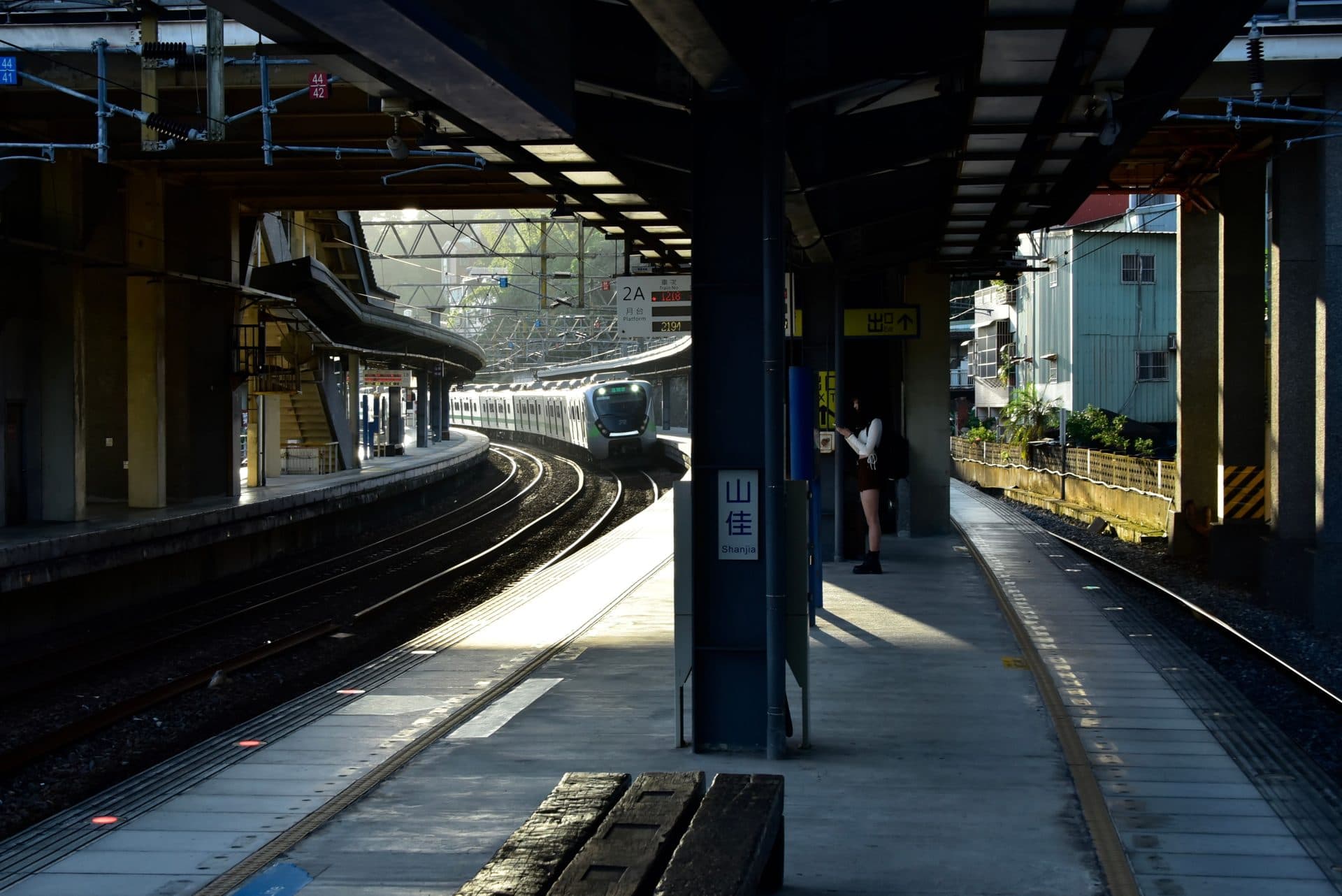
This is the rule that keeps crowded stations functional. Stand in the marked lines on the platform. When the train arrives, wait beside the doors, not directly in front of them. Let passengers exit first, then board.
If you're traveling with a suitcase, stand slightly back so exiting passengers don't have to step around your bag. On busy Tokyo lines, one badly placed suitcase can block an entire door.
2. Keep your phone silent, and don't take calls
Quiet phone use is normal. Phone calls are not. Set your phone to silent mode and avoid speaking on it inside trains and buses.
JNTO's public-transportation manners guidance is clear that speaking at any volume on a phone is generally frowned upon while riding trains and buses. If you must take an urgent call, get off at the next station or wait until you're outside the train.
Messaging, maps, translation apps, and route apps are fine. Use headphones for audio, and keep the volume low enough that nobody else can hear it.
3. Speak quietly
You don't need to be silent — soft conversation is usually acceptable, especially outside rush hour. But match the car. If everyone else is quiet, lower your voice. If you're in a group, avoid standing in a circle and projecting across the aisle.
4. Use priority seats properly
Priority seats are for elderly passengers, pregnant passengers, disabled passengers, injured passengers, and people with small children or mobility needs. If you sit there and someone who needs the seat boards, offer it quickly.
The harder situation is when the car is half empty and tourists wonder whether they can sit. The safest approach is to leave priority seats open when regular seats are available, and move before someone has to ask if the train fills up.
5. Manage luggage before it becomes everyone else's problem
Japan's tourism authorities now explicitly ask visitors to travel light. The Japan Tourism Agency's responsible traveler guidance recommends avoiding sightseeing during rush hours when locals commute, using luggage storage or courier services, and not taking large luggage into crowded spaces.
- Keep backpacks in front of you or at your feet in crowded cars
- Don't leave suitcase handles extended across the aisle
- Don't block doors
- Avoid peak commuter trains with large luggage when possible
- Use coin lockers or luggage forwarding on hotel-transfer days
For stairs and escalators, be realistic — if you can't safely carry a suitcase, find the elevator. Rushing with heavy luggage creates risk for everyone behind you.
6. Know the Shinkansen oversized baggage rule
The Shinkansen has a specific rule many visitors miss. JR Central states that on the Tokaido, Sanyo, Kyushu, and Nishi-Kyushu Shinkansen, baggage with total outside dimensions from 161 cm to 250 cm requires a reservation for an oversized baggage area. Bring oversized baggage without a reservation, and a ¥1,000 tax-included fee may apply (as of 2026-07). Baggage over 250 cm total dimensions cannot be brought aboard at all.
7. Don't eat on commuter trains
On local commuter trains, avoid eating. Drinking water or tea quietly is usually fine; snacks aren't illegal, but they're often inconsiderate in a packed car, especially if they smell or create crumbs.
The Shinkansen and many long-distance limited express trains are different — an ekiben or tidy meal is normal on intercity services, especially with forward-facing seats and tray tables. Even then, avoid strong-smelling food, keep packaging contained, and take your trash with you.
8. Stand where you aren't blocking movement
Inside the car, move away from the doors when possible. If you're standing near the doors because the train is crowded, step off briefly at stations to let people exit, then reboard — this is normal and appreciated.
- Standing in the doorway when space exists inside
- Stopping at the top or bottom of stairs to check your phone
- Opening a map in the middle of a ticket gate flow
- Parking luggage beside the fare gate
- Blocking the escalator landing
If you need to check directions, move to the side first.
9. Respect boarding lines and women-only cars
Platform markings matter — many stations show where doors will open and where to queue. Some lines and times also run women-only cars, usually marked with signs on the platform and train windows. If you're unsure whether a car applies to you, check the sign, time period, and direction.
Don't force your way into a car when staff are managing boarding. If a train is too full, another one is usually close behind in major cities.
10. Prepare before the ticket gate
Have your IC card, ticket, or QR code ready before you reach the gate. If something fails, step out of the flow and ask staff — don't stand at the gate searching through bags while commuters queue behind you.
If using a mobile IC card, keep enough battery. If using paper tickets, take the ticket from the exit gate if the machine returns it for a transfer; if the gate keeps the ticket, your trip is complete.
Rush hour: when to avoid trains with luggage
Peak times vary by city and line, but weekday mornings into central business districts and early evenings out of them are the hardest. The Japan Tourism Agency specifically recommends avoiding sightseeing during rush hours when local people use public transport for commuting.
If you have large luggage, try to move between hotels late morning or early afternoon. If that's impossible, use luggage delivery — the convenience isn't just for you; it prevents your suitcase from becoming an obstacle in a packed car.
What most guides miss: silence isn't the whole point
Visitors often reduce Japanese train etiquette to "be quiet." Quiet matters, but the deeper rule is not taking more shared space than you need.
- Your voice shouldn't dominate the car
- Your bag shouldn't occupy a seat
- Your suitcase shouldn't block a door
- Your group shouldn't fill the aisle
- Your food shouldn't smell up the car
- Your phone shouldn't force others into your conversation
The system works because millions of small acts reduce friction.
Mistakes visitors make
Wearing a backpack on a packed train
Take it off and hold it low or in front of you. A backpack at shoulder height hits seated passengers and takes more space than you think.
Sitting separately from luggage
Keep bags near you. On the Shinkansen, use the luggage rack, foot space, or reserved oversized area — don't assume the space behind the last row is free for anyone.
Boarding first, figuring it out later
Check your direction, train type, and platform before boarding. On local lines, boarding the wrong train may be a small delay; on limited express or Shinkansen services, it can become expensive or stressful.
Treating station staff as tour planners
Station staff can help with train problems, ticket issues, and directions inside the rail system. They aren't a full itinerary desk — prepare route options before you enter a busy station.
Final advice
Japanese train etiquette is less about perfection than awareness. Let people off first. Keep your phone silent. Offer priority seats. Control your luggage. Avoid rush hour with big bags. Eat only where the train type makes it appropriate.
If in doubt, watch what calm commuters are doing and copy the pattern. That one habit solves most train-manners problems before they start. For the practical side of getting around — which IC card to use and how to load it — see our Suica IC card guide.
Can you talk on Japanese trains?
Quiet conversation is usually acceptable, but phone calls are generally frowned upon on trains and buses according to JNTO guidance.
Can you eat on Japanese trains?
On local commuter trains, avoid eating. On long-distance limited express and Shinkansen services, tidy meals such as ekiben are normal, but avoid strong smells and clean up after yourself.
Do large suitcases need reservations on the Shinkansen?
On the Tokaido, Sanyo, Kyushu, and Nishi-Kyushu Shinkansen, baggage with total dimensions from 161 to 250 cm requires an oversized baggage reservation; unreserved oversized baggage may trigger a ¥1,000 fee.