This article contains affiliate links. If you book through them we may earn a small commission at no extra cost to you — it helps keep Authentic Japan free.
Japan is not the cash-only country older guidebooks describe. The Ministry of Economy, Trade and Industry (METI) reported that Japan's 2024 cashless payment ratio reached 42.8%, with ¥141.0 trillion in cashless transactions, in its official release dated March 31, 2025. That number changes the practical advice: you no longer need to arrive with a thick envelope of yen for every hotel, train, and meal.
But the other half of that statistic matters just as much — more than half of consumer payment value was still not cashless in METI's own calculation. This guide is not about where to get the best exchange rate (see our currency exchange guide for that). It is about the wallet system that actually works on the ground: how much cash to carry, where cards fail, how IC cards fit in, and how to avoid getting stuck at the exact moment a small shop says cash only.
The Short Answer
For most first-time travelers, the best Japan payment setup is layered, not all-card or all-cash:
- One no-foreign-transaction-fee Visa or Mastercard (see our best credit cards for Japan if you need to pick one)
- A backup card stored separately from your main wallet
- A mobile Suica, PASMO, or physical IC card for transit and small purchases
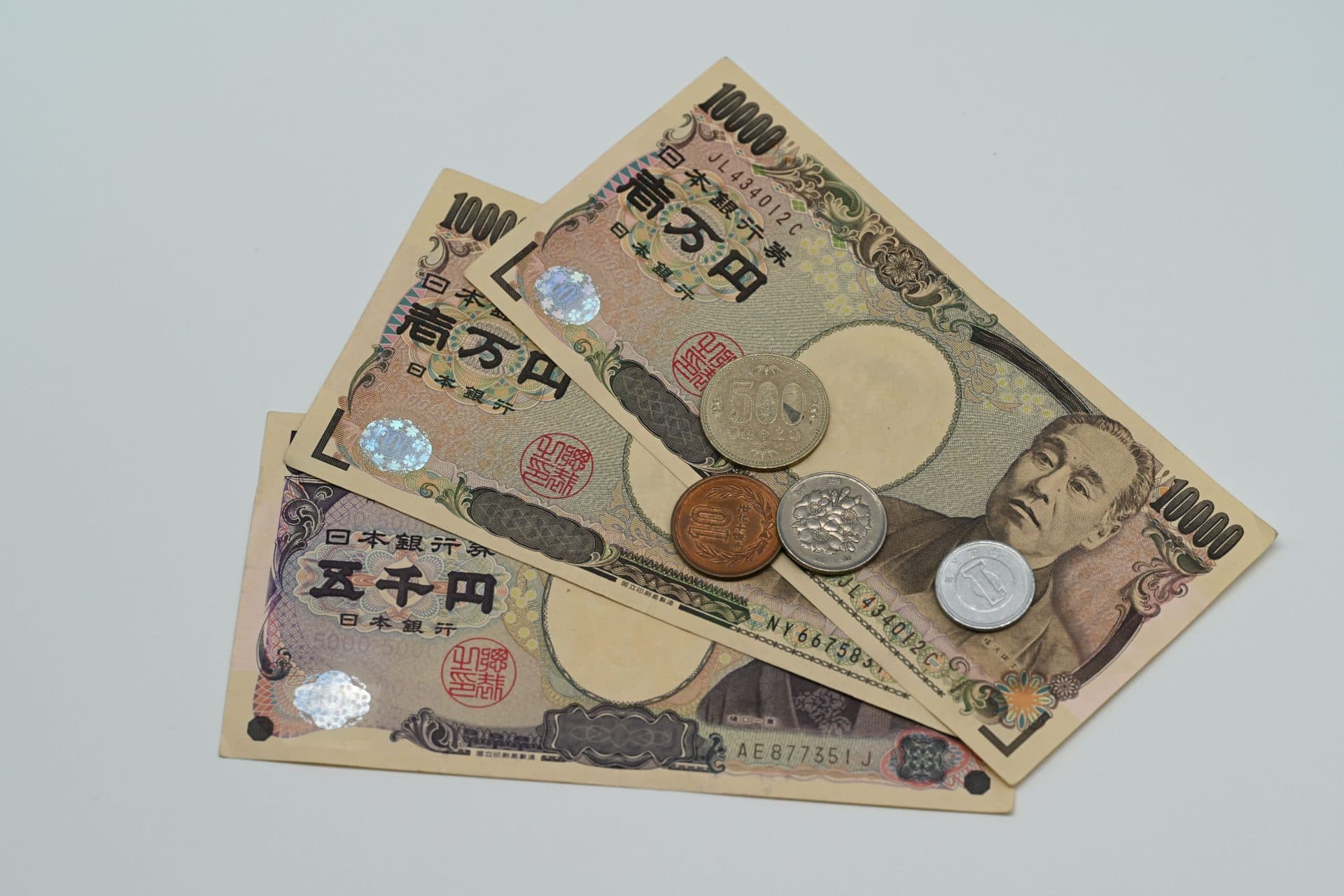
- ¥10,000–¥20,000 in accessible daily cash
- A plan to withdraw more from Seven Bank or Japan Post Bank ATMs
Use cards for hotels, large restaurants, department stores, attraction tickets, and shopping. Use IC cards for trains, buses, vending machines, convenience stores, and station kiosks. Use cash for small restaurants, local markets, temple and shrine fees, rural buses, coin lockers, and festival stalls.
Where Cards Usually Work
Cards are reliable in the parts of Japan that handle high visitor volume: hotels, airport counters, major department stores, electronics stores, drugstores, chain restaurants, theme parks, observation decks, and most museums. Visa and Mastercard are the safest bets; American Express works in many higher-end places but isn't as universal. In Tokyo, Yokohama, Sapporo, Fukuoka, and Nagoya, card acceptance is strong enough that a hotel-train-chain-cafe-museum itinerary can run for days on almost no cash.
The mistake is assuming "Tokyo accepts cards" means every Tokyo business does. The exact places visitors want most — tiny ramen shops, old coffee shops, neighborhood izakaya, temple counters, and cash-ticket vending machines — are often where cards disappear.
Where Cash Still Matters
JNTO's official currency guidance still recommends carrying cash and notes that Japan remains a cash-based society in some situations. Keep yen on hand for:
- Ramen and soba shops with ticket machines
- Small izakaya and older family-run restaurants
- Shrine offerings and temple entry fees
- Local buses outside the largest cities
- Markets, festival stalls, and morning markets
- Some coin lockers, laundromats, and vending machines
- Taxis in smaller towns
- Rural ryokan incidentals or pay-on-arrival stays
Cash also reduces friction. If a restaurant is busy and the cashier points to a small tray, paying with exact or near-exact yen is faster than asking whether a foreign card will work — a simple ¥900 lunch shouldn't turn into a payment negotiation.
How Much Cash to Carry
A practical city buffer is ¥10,000–¥20,000 per person — enough for a cash-only lunch, a temple visit, vending machine drinks, and an emergency taxi or bus fare. For a one-week city trip, many travelers withdraw ¥30,000–¥50,000 at the start and top up only if needed. Families should scale this by how often the group splits up and whether kids need their own transit or snack money.
For rural travel, onsen towns, cycling routes, mountain areas, or festival-heavy itineraries, raise the buffer to around ¥30,000 in accessible cash. If you're checking into a small ryokan, confirm the payment method before arrival — do not assume card acceptance just because the booking site took a card guarantee.
Getting Cash from Japanese ATMs
Seven Bank and Japan Post Bank are the two networks most visitors rely on: Seven Bank has ATMs inside every 7-Eleven, and Japan Post Bank fills the gaps in smaller towns. Fees, hours, and per-transaction limits differ enough between networks that it's worth reading the full breakdown in our ATMs in Japan for foreign cards guide before you land. Note that your home bank may add its own international withdrawal fee on top — that's controlled by your card issuer, not the Japanese ATM.
IC Cards Are the Missing Middle Layer
An IC card is not the same as a credit card. Suica, PASMO, ICOCA, and similar stored-value cards handle trains, buses, vending machines, convenience stores, lockers, and countless small purchases — see our guides to setting up mobile Suica on iPhone or choosing a physical IC card for the setup details. Because IC card sales and tourist-card availability change from year to year, verify the latest station information close to your trip.
The practical use is simple: load enough for transit and small purchases, then keep cash for places that can't take IC cards. An IC card is excellent for a ¥170 train ride or a ¥160 vending-machine drink — it is not a replacement for a real cash reserve. If you'd rather skip the station-machine setup entirely, a Suica IC card pre-loaded through Klook can be collected at Haneda Airport or shipped to your hotel.
Always Choose Yen on the Terminal
If a shop terminal or ATM offers to charge your card in your home currency, choose yen instead. That option is usually dynamic currency conversion (DCC) — the rate is set by the terminal provider, not your card network, and it is typically worse. The clean rule: pay in yen in Japan and let your bank handle the conversion. This matters most for hotels, department stores, and ATMs, where the amounts are large enough for a bad rate to actually cost you.
A Sample Wallet Setup
A normal sightseeing day in Tokyo
- ¥12,000 cash in your wallet
- ¥20,000 backup cash in your hotel safe or a second pouch
- Mobile Suica loaded with ¥3,000–¥5,000
- Main Visa or Mastercard
- Backup card stored separately
A day trip to a smaller town
- ¥20,000–¥30,000 cash
- IC card topped up before leaving the city
- A card, but don't depend on it for every meal
- Coins or small bills for buses, lockers, and entry fees
A rural overnight stay
- Confirm accommodation payment method in advance
- Carry enough yen for meals and local transport
- Withdraw before leaving the major station
- Don't rely on finding a 24-hour international ATM near the inn
Common Payment Mistakes to Avoid
- Landing with no cash at all. Airports, airport trains, and taxis usually take cards, but JNTO still recommends carrying some. Withdraw a modest amount on arrival if you didn't bring yen.
- Carrying only ¥10,000 notes. Small restaurants and buses are easier with ¥1,000 notes and coins — break large notes at convenience stores or supermarkets when you can.
- Draining your IC card on the last train before a rural connection. Keep transit money separate from snack money; a card that works perfectly in Tokyo can still leave you stuck at a bus stop with no nearby top-up machine.
- Assuming a card-network sticker guarantees your exact card will work. International cards can fail from issuer settings, security blocks, or routing issues. Carry two cards and some cash.
Bottom Line
Japan in 2026 is cashless enough that you shouldn't overpack yen, but cash-based enough that you should never go fully cashless. The most reliable system isn't one payment method — it's a small stack of yen, a good card, a backup card, and an IC card working together. Treat cash as travel infrastructure, not nostalgia: you may not use it every hour, but when you need it, nothing else is as efficient.
Can I travel in Japan with only a credit card?
In major cities, cards cover most hotels, chains, department stores, and larger restaurants. But cash is still needed for small shops, shrine and temple fees, local buses, markets, and some rural accommodation — plan on carrying at least ¥10,000–¥20,000 as a buffer.
How much cash should I carry each day in Japan?
For most city travelers, ¥10,000–¥20,000 in accessible daily cash is a practical buffer. Raise that to around ¥30,000 for rural areas, onsen towns, or festival days, then withdraw more from a Seven Bank or Japan Post Bank ATM as needed.
Should I choose yen or my home currency on card terminals?
Always choose yen. If a terminal offers to settle in your home currency, it's dynamic currency conversion (DCC), and the rate is usually worse than what your card network or bank would apply.